Usnea | Breath of the Forest
If you bring a fresh cluster of Usnea to your nose, the scent is surprisingly bright and clean.
It carries a subtle aroma of ocean air, with a faint hint of ozone, like the freshness that lingers in the forest after rain has passed through the canopy. It is a clarifying scent, light and expansive, echoing the place where Usnea lives suspended high in the moving currents of air.
Usnea, often called Old Man’s Beard, is not a plant at all, but a lichen. A remarkable symbiosis between a fungus and an alga living together as one organism.
The species most commonly found draping the branches of coastal forests is Usnea longissima, forming long, trailing strands that hang gracefully from the limbs of old trees. Here on the west coast it is most often seen dangling from mature Douglas Fir in older forests where the air is clean and the ecosystem remains intact.
Once prolific throughout the northern Pacific Northwest, from Alaska down through California, Usnea longissima has become less common in recent decades. Considered an indicator species for air quality, Usnea is extremely sensitive to pollution and environmental disturbance.
Because it absorbs moisture and nutrients directly from the air rather than from soil, it can only thrive where the atmosphere remains clean and balanced.
Living high in the forest canopy, bathed in mist, rain, and moving air, Usnea exists in constant relationship with the breath of the forest itself.
And perhaps it is no surprise that the medicine it offers us reflects that same relationship.
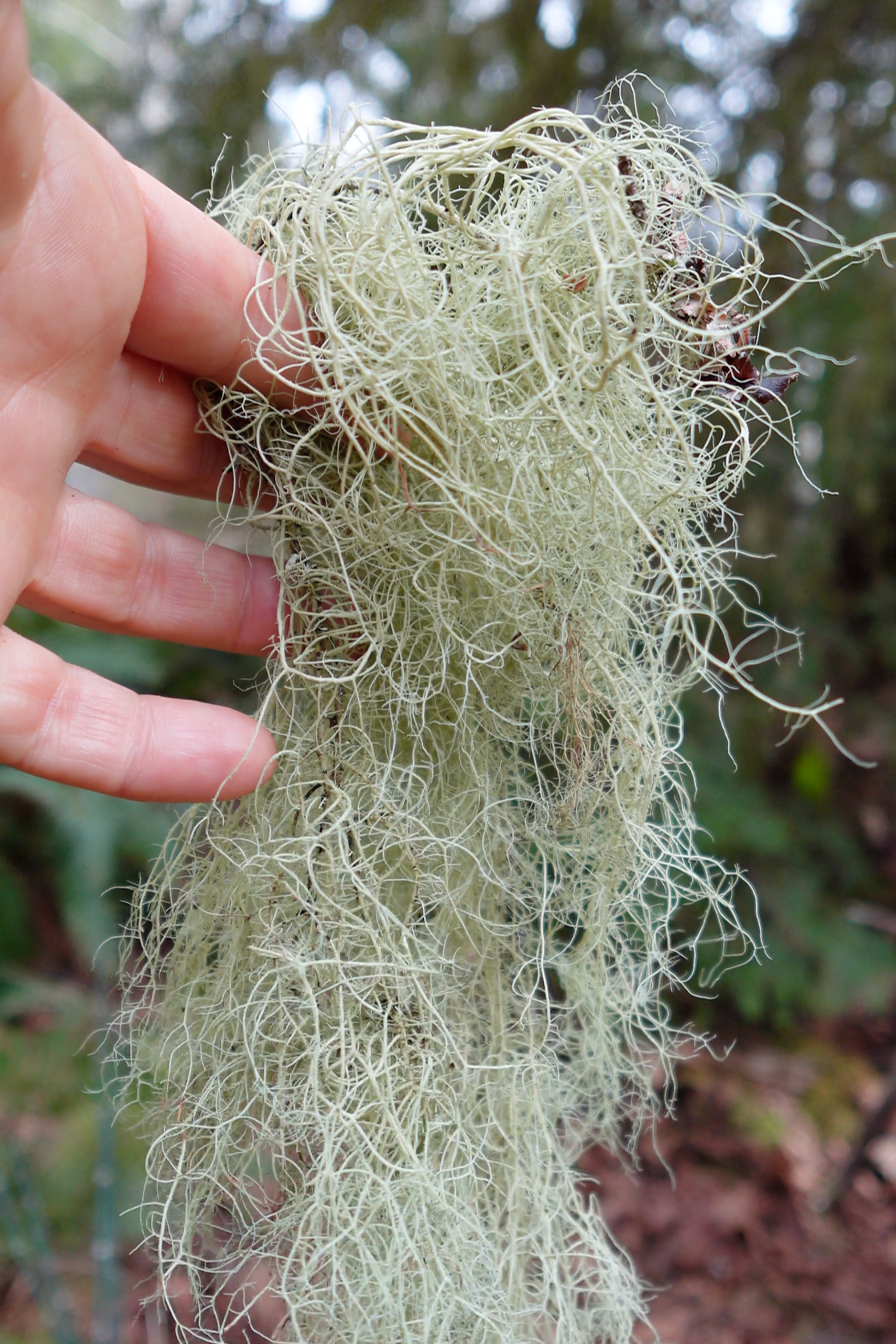
Usnea is not a single organism, but a living partnership between two very distinct forms of life: a fungus and an alga working together as one.
A Lesson from the Forest
Nearly twenty years ago, when I was just beginning to learn about Usnea, I had an experience that has stayed with me ever since.
Most of the time, when we spend long periods sitting with plants and walking quietly through forests, their communication is subtle. It comes in impressions, in images that rise through the mind, in small poetic thoughts that drift through awareness. It has a dreamlike quality, as though the plants themselves are dreaming with you.
These impressions can be very powerful, yet they are often quiet and indirect.
There was one day with Usnea, however, when the communication felt very different.
I remember walking through our Pacific Northwest forest with the intention of finding some Usnea to support an infection. I had recently learned about its remarkable antimicrobial properties and its long history of use for wound care, and it felt like the right medicine for the moment.
As I wandered farther off trail, I came into an area where Usnea seemed to be everywhere. Whole branches were draped in pale green lichens. Some trees were covered with it so thickly that the strands hung in soft curtains from the canopy.
Standing there in that quiet place, far from roads or people, a thought came to me.
With so much of it here, how could it possibly matter if I gathered a little directly from the trees?
I had heard that harvesting Usnea this way was not considered good practice. It grows slowly and is sensitive to environmental change. Even when it appears abundant in a particular place, the ecosystems where it thrives are becoming fewer and farther between.
But at that time I was still very early in my path as an herbalist, still learning how to listen.
And so I began gathering it.
I wasn’t planning to take much. Just a few small pieces from the branches.
Yet as I reached up and began pulling the lichen away from the tree, something felt off. A subtle uneasiness settled in as I moved from branch to branch.
Then, suddenly, as clear as if someone had spoken aloud, a single word came through:
“Greedy.”
The forest had spoken.
I remember standing there, completely still, holding the Usnea in my hand.
In all the years since, I have never experienced communication from the forest in quite such a direct and abrupt way.
That moment stayed with me. It taught me something early on that has shaped the way I move through wild places to this day.
The lesson was simple.
Respect the forest.
Respect the relationships that exist there.
And be careful not to move through the land with a mindset of taking.
When you go out to gather plants, it is important not only to look with your eyes, but also to pay attention to how a place feels.
Sometimes you may arrive somewhere and see a plant growing abundantly. Everything might appear to say that harvesting would be fine. Yet something in the body or in the atmosphere may quietly suggest otherwise.
When that feeling arises, it is wise to listen.
Leave the plant where it is. Move on. Trust that the forest knows more than we do.
Over time, this kind of listening changes the way you move through the land.
And in many ways, it reflects the very nature of Usnea itself.
Though we often experience ourselves as separate individuals, life in the forest does not exist in isolation. The animals, the plants, the trees, the fungi, the lichens, the rocks, the air — everything participates in a vast network of relationships.
Usnea reminds us of this truth.
A lichen is not a single organism, but a partnership between different forms of life, each supporting the other.
In this way, Usnea teaches us something about the sensitivity and value of relationship itself.
And perhaps, if we listen closely enough, the forest will sometimes remind us when we forget.
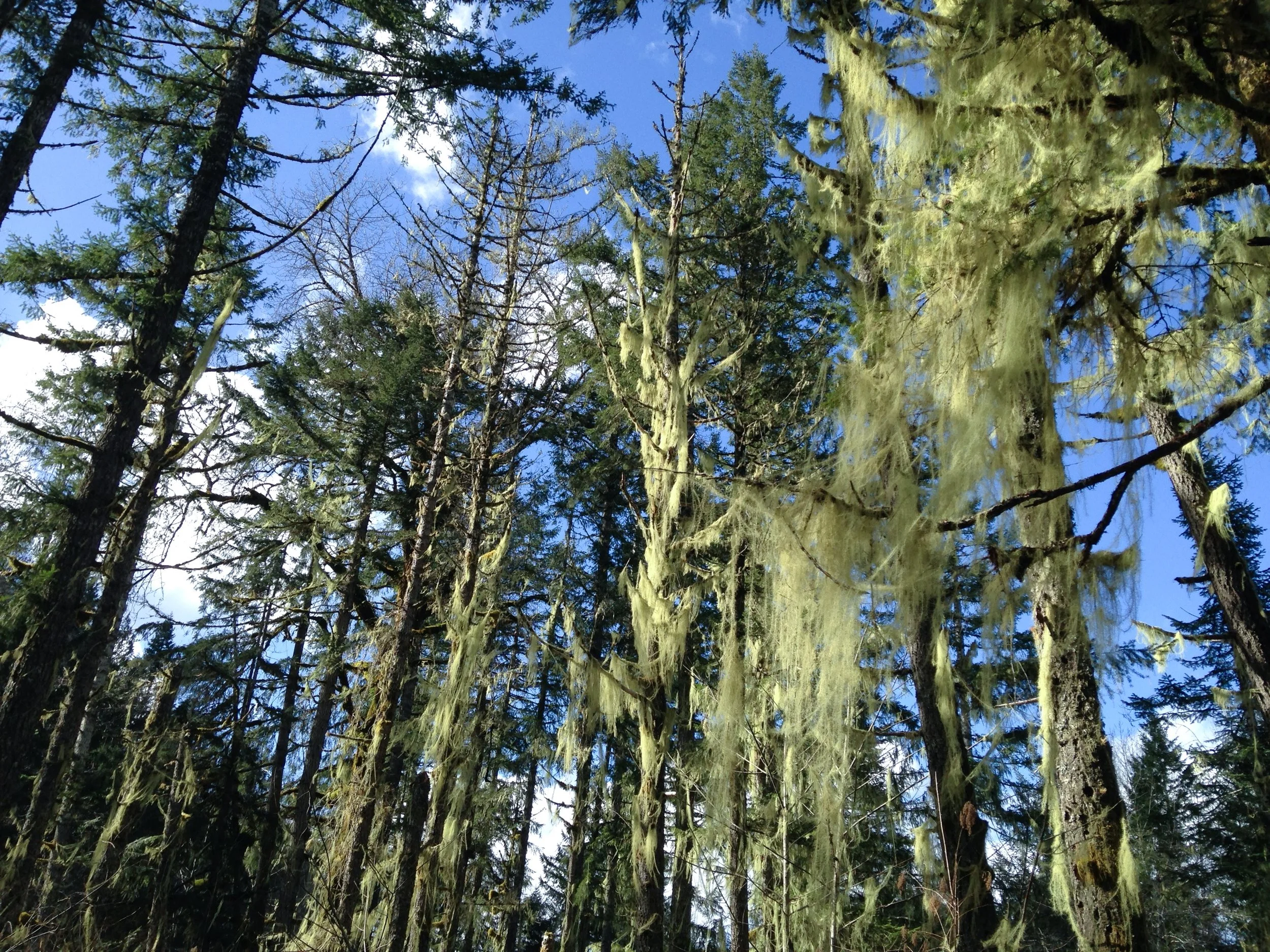
Airy swaths of Usnea hanging from the branches of coastal Douglas Fir.
Usnea Spirit Medicine
Spending time with Usnea invites a different pace.
High above the forest floor, these pale green strands drift quietly, swaying with each passing breeze. Unlike plants that root themselves firmly in the soil, Usnea lives suspended between earth and sky, gathering its nourishment from rain, mist, and the atmosphere itself.
Because of this, Usnea carries a medicine that is deeply connected to the air element.
Air moves through all living beings. It flows through forests, across oceans, and through the lungs of every animal on earth. To sit with Usnea is to be reminded of this quiet continuity, the invisible thread that connects all species through the shared act of breathing.
In many ways, Usnea teaches us to slow down and listen.
To sit beneath the trees where it grows, to watch the strands moving gently in the wind, is to witness a form of patience that unfolds over decades. Each delicate filament represents years of quiet growth in the forest canopy.
Usnea also carries the wisdom of symbiosis.
A lichen is not a single organism but a partnership between two very different forms of life, each supporting the other. Together they create something entirely new. In this way Usnea reflects a deeper ecological truth: that life is sustained through relationship.
When we work with Usnea, we are reminded that healing rarely happens in isolation. Just as the lichen depends on its living partnership, we too rely on the communities and ecosystems that sustain us.
There is a certain spaciousness to Usnea’s presence.
It clears, opens, and creates room for breath to move freely again. In times when the body or mind feels constricted, its medicine encourages us to soften, to breathe more deeply, and to reconnect with the quiet intelligence that exists within the natural world.
To sit with Usnea is to sit with the trees themselves, breathing slowly with the forest.
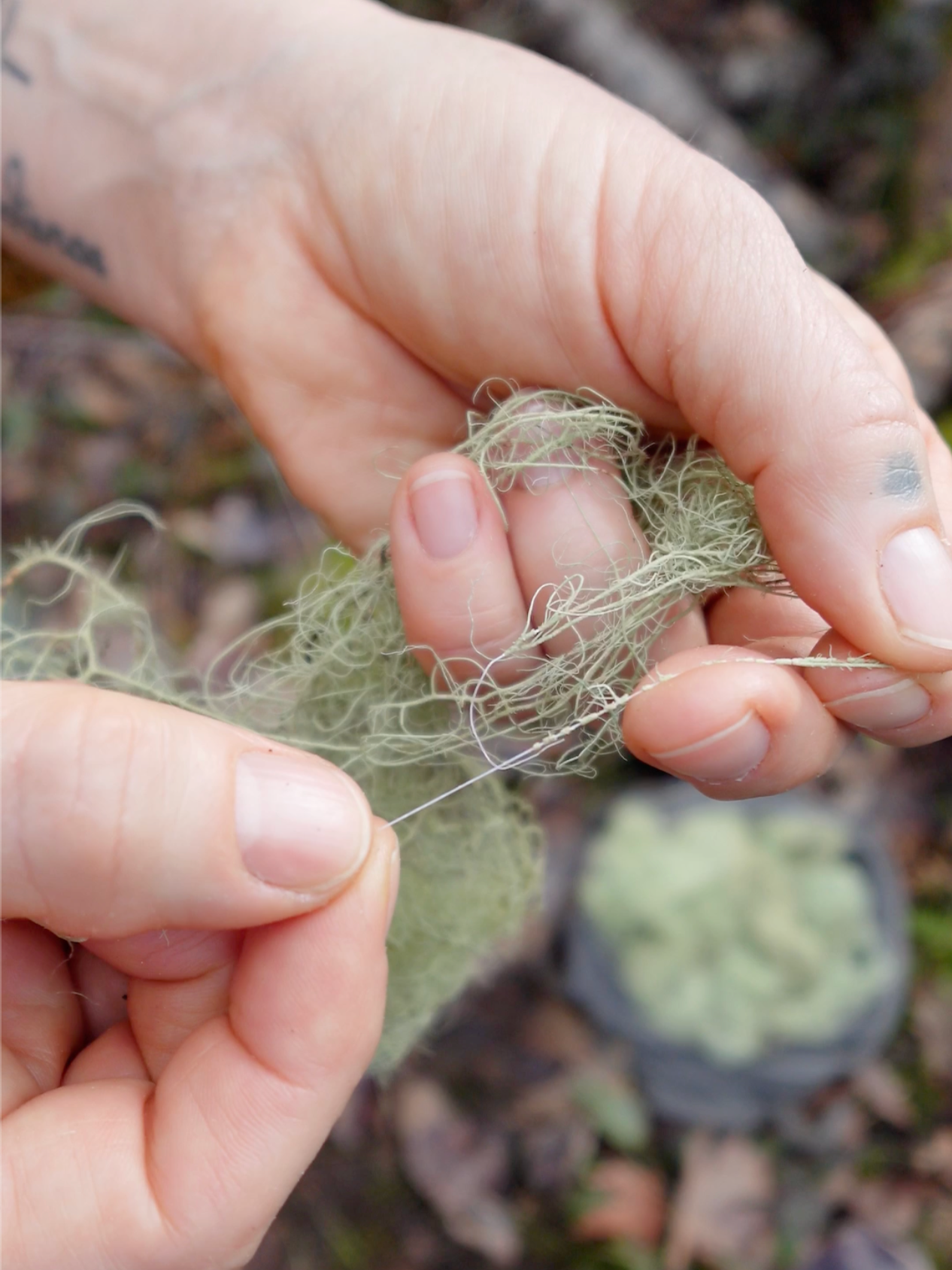
A strand of Usnea when pulled apart will reveal a central white elastic cord.
Usnea in the Apothecary
Beyond its subtle energetic teachings, Usnea has long been valued as a powerful medicinal ally.
For generations, herbalists throughout the northern hemisphere have turned to Usnea as a valuable support for the body during times of infection.
Part of what makes Usnea such an interesting medicine is that its structure mirrors its medicinal actions.
Lichens themselves are not a single organism but a living partnership between a fungus and an alga. The fungus provides structure and protection, while the alga captures sunlight and produces nourishment. Together they form a completely unique life form.
This layered structure is reflected in the chemistry of the medicine as well.
The outer cortex of the lichen contains antibiotic and antifungal substances, particularly usnic acid, which help protect the lichen from microbial attack in the damp forest environments where it grows.
The white inner core contains complex immune-modulating polysaccharides, compounds that appear to help stimulate and regulate the body’s immune response.
In this way Usnea offers a kind of twofold medicine: directly inhibiting microbial growth while also supporting the body’s own immune defences.
Because these compounds extract differently, many herbalists prefer to prepare Usnea using a double extraction, combining alcohol and water to draw out both the antimicrobial lichen acids and the immune-supporting polysaccharides, producing a potent and balanced extract.
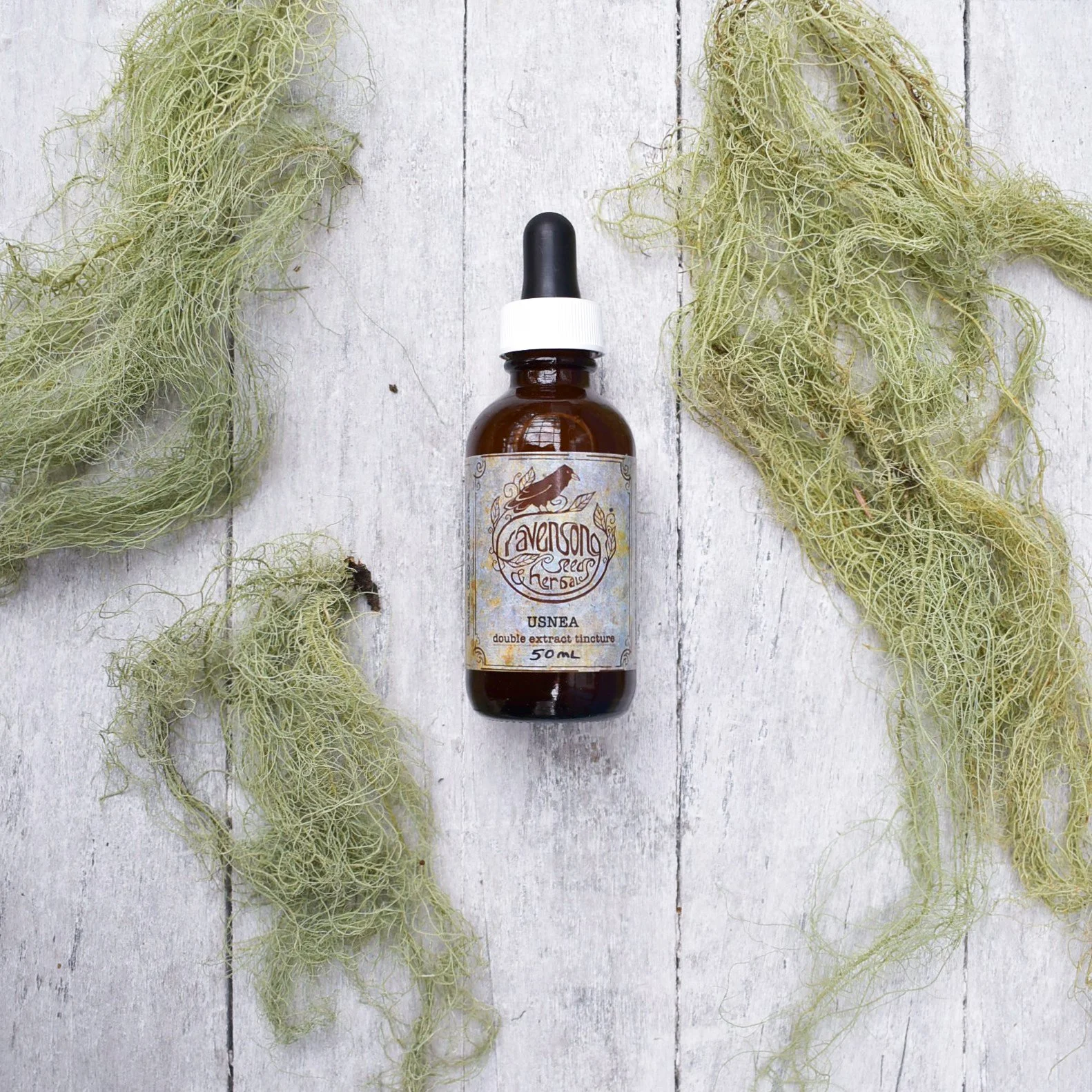
Our Usnea double extract prepared from sustainably gathered wind-fallen lichen. Both alcohol and water are used in the extraction process to capture the full spectrum of Usnea’s medicinal compounds. Explore our small-batch preparation here.
The Antimicrobial Power of Usnic Acid
The primary medicinal compound in many Usnea species is usnic acid, which has been extensively studied for its antimicrobial activity.
Research has shown that usnic acid can be highly effective against certain bacterial infections, particularly those caused by gram-positive bacteria such as Streptococcus and Staphylococcus. In some studies, its activity has been shown to rival that of penicillin.
Importantly, usnic acid works as an antibiotic by a different mechanism than synthetic antibiotics, which makes it extremely valuable for treating drug resistant bacteria strains.
Penicillin functions by mimicking a structural component in the cell walls of bacteria. When the bacteria attempt to incorporate the penicillin molecule into their cell wall, the resulting structure becomes unstable and the cell eventually ruptures.
Usnic acid appears to work differently. Researchers believe it disrupts cellular metabolism, either by interfering with the production of ATP (the cell’s energy source) or by uncoupling oxidative phosphorylation within microbial cells.
Human cells are far less permeable to usnic acid and are therefore largely unaffected by this process.
Another interesting feature of Usnea’s antimicrobial activity is its selectivity. Usnic acid is primarily active against gram-positive bacteria, while having little effect on gram-negative bacteria such as E. coli or Salmonella.
This selectivity may actually be beneficial, as many of the beneficial microbes that make up our beneficial gut flora are gram-negative, meaning Usnea may be less disruptive to healthy microbial ecosystems than broad-spectrum antibiotics.
Respiratory and Urinary Affinities
Because of it’s immune supportive and antimicrobial actions, Usnea has traditionally been used to help the body respond to infections of the respiratory and urinary systems, as well as externally for wounds and skin irritations.
One of Usnea’s strongest affinities is with the lungs.
Living high in the forest canopy where it gathers moisture and nourishment from the atmosphere, it seems only fitting that its medicine supports the respiratory system. Herbalists often turn to Usnea during times of sore throat, bronchial irritation, persistent cough, or respiratory infections where microbial imbalance may be present.
In our apothecary, we often work with Usnea in formulas intended to support the immune response and soothe irritated throat tissues. Our Immune Booster Tincture, made with fresh Echinacea, Elder, and Usnea, is one example of how this lichen can be combined with other herbs traditionally used to support the body during times of infection. For more direct throat support, we also include Usnea in our Throat Soother Spray, where it works alongside herbs such as Licorice and Hyssop.
Usnea also has a long tradition of use in supporting the body through urinary tract infections. Its antimicrobial properties can help inhibit the growth of unwanted bacteria while allowing the body’s own immune response to remain active and engaged.
External Applications
Externally, Usnea can be used to support the healing of cuts, wounds, and skin infections. Infused oils, washes, or tinctures applied topically can help discourage microbial growth while supporting the body’s natural repair processes.
In our own apothecary, Usnea is often prepared as a topical salve for this purpose. Our Usnea Salve features sustainably wild-harvested Old Man’s Beard gathered from windfallen branches, allowing the lichen’s antimicrobial qualities to support the skin’s natural healing processes.
We also include Usnea in several forest-inspired salve blends. Our Cuts & Scrapes Salve combines Usnea with Oregon Grape and Poplar bud to support the healing of minor wounds, while our Fungal Remedy Salve brings together Usnea, Western Red Cedar, Yarrow, and Poplar bud to support the skin in cases where fungal imbalance may be present.
Usnea is also traditionally used in herbal ear oils. Our Ear Ease Oil, made with Calendula flowers, Mullein flowers, and sustainably wild-harvested Usnea, reflects this traditional preparation.

Our Cuts & Scrapes Salve blends Usnea with other forest medicines traditionally used to support the healing of minor wounds and skin irritations. Explore the salve here.
Traditional Uses Across Cultures
Medicinal use of Usnea stretches back many centuries.
The lichen was first recorded in written medicine in the Formulary of Al-Kindi around 850 AD, where it was recommended for treating swollen spleen. In early Greek medicine, Hippocrates and Dioscorides also described its use for uterine conditions.
In traditional Chinese medicine, species of Usnea have been used for thousands of years as expectorants, particularly in cases of colds, flu, and respiratory congestion.
Across North America, many First Nations communities have long worked with Usnea as well. It was commonly used to support the body during bronchitis and respiratory infections, often prepared as a strong decoction.
The lichen was also used for digestive complaints such as diarrhea and stomach problems, and was applied directly to wounds to help prevent infection and speed healing. In some communities it was even used as a natural disinfectant for household items.
Usnea also had practical uses beyond medicine. It was sometimes used as a filter when preparing spruce pitch medicines, straining hot resin through the lichen to remove debris. Various cultures have also used Usnea species as natural dye plants.
A Medicine that Works with the Body
What makes Usnea especially interesting as an antimicrobial herb is that it tends to work alongside the body’s defences rather than overriding them.
Rather than acting as a blunt force against microbes, it helps restore balance in environments where harmful organisms may be taking hold.
In many ways, Usnea reflects the forests where it grows. Its medicine is both protective and supportive, discouraging the growth of harmful microbes while allowing the body’s own intelligence to remain active. Like the lichen itself — a partnership between different forms of life — its healing action arises through balance and relationship.
This is perhaps part of what has drawn herbalists to Usnea for centuries. A quiet medicine of the forest canopy, working patiently alongside the body as it restores health.
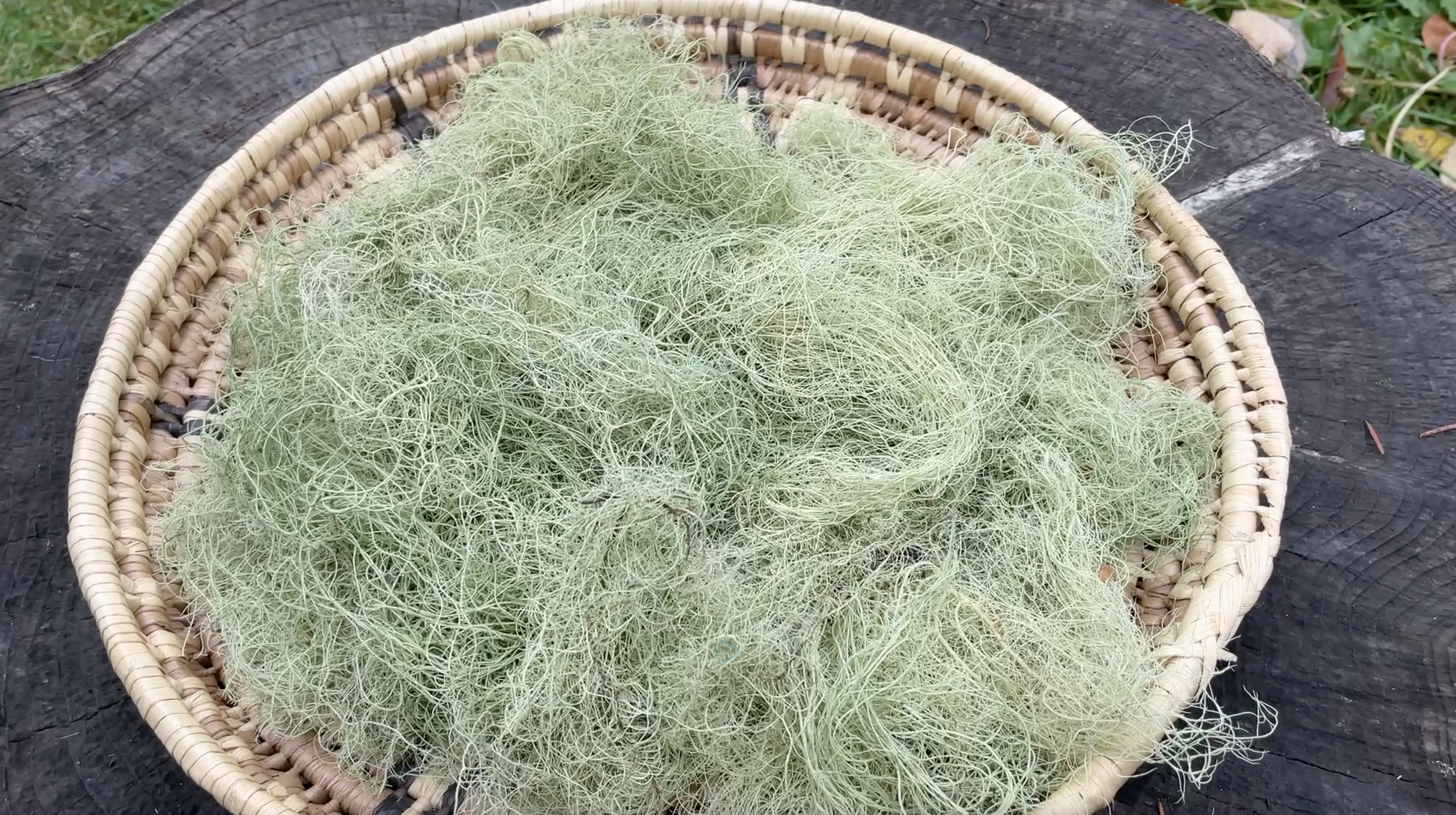
A basket of freshly gathered Usnea, carefully cleaned of bark, twigs, and forest debris.
Harvesting and Identifying Usnea
Usnea, often called Old Man’s Beard, is a fruticose lichen that forms long, branching strands of pale green to grey-green threads that drape from tree branches. In our coastal forests it is most often seen hanging from older conifers such as Douglas Fir, spruce, and hemlock, though it can occasionally be found on hardwood trees as well.
One of the most reliable ways to confirm identification is the central cord test. If you gently stretch a strand of Usnea between your fingers, the outer layer will separate slightly to reveal a thin white elastic cord running through the center. This flexible inner filament is characteristic of Usnea and helps distinguish it from other hanging lichens.
Video demonstration showing how to identify Usnea using the central cord test, along with how to distinguish it from a common look-alike.
Usnea grows slowly.
High in the forest canopy, these delicate strands may take many years to reach the lengths we see swaying from the branches of old trees. Because of this slow growth, harvesting Usnea asks for patience and restraint.
Fortunately, the forest often provides what we need without requiring us to disturb the living canopy above.
After windstorms or heavy weather, fallen branches can often be found scattered across the forest floor with strands of Usnea still attached. These windfallen limbs provide an ideal opportunity to gather the lichen while leaving the living ecosystems above intact.
It is important to only gather Usnea from where it has fallen from above and never take the living lichen directly off of trees. Since each strand represents many years of quiet growth, a light touch helps ensure that these living communities can continue to thrive.
When harvesting, gently remove the Usnea from the branches and take time to clean away any bits of bark, twigs, moss, or needles that may be tangled in the strands.
Usnea is also considered an indicator species for clean air, thriving only in environments where the atmosphere remains relatively free from pollution. For this reason, it is best to gather it in forests far from highways, industrial activity, or other sources of environmental contamination.
Approached with care and gratitude, harvesting Usnea can become a quiet practice of deepening our relationship with the forest itself.
Video demonstration showing how to sustainably harvest Usnea from fallen branches and the forest floor, and how to clean it after gathering.
Making Medicine with Usnea
Usnea contains medicinal compounds that are both water-soluble and alcohol-soluble, which means it can be prepared in a variety of ways depending on the intended use.
Many herbalists prepare Usnea as a decoction, tincture, or double extract for internal use during times of infection, while others work with it externally to support the healing of wounds, skin irritations, and minor infections.
One of the simplest and most useful preparations is a Usnea-infused oil, which can then be transformed into a soothing salve for cuts, scrapes, minor skin infections, or areas of irritation.
Because Usnea grows in long tangled strands and contains a tough central cord, it does not easily break down. For this reason it is helpful to begin by cutting or chopping the dried lichen into small pieces, which increases the surface area and allows the oil to penetrate the plant material more effectively.
Before infusing the lichen in oil, many herbalists briefly moisten the chopped Usnea with a small amount of high-proof alcohol. This step helps break down the tough cell walls of the lichen and begins dissolving some of the antimicrobial compounds, making them more accessible during the oil infusion.
Once lightly moistened, the Usnea can be gently warmed in oil to draw out its antimicrobial and skin-supporting properties, creating an infused oil that forms the foundation of the salve.
Video demonstration showing how to make a simple Usnea salve by infusing the lichen into oil and combining it with beeswax.
Usnea Salve Recipe
This simple preparation creates a soothing herbal salve that can be used to support the healing of minor wounds, cuts, scrapes, and irritated skin.
Ingredients
• 35g dried Usnea, finely chopped
• 15-20ml high-proof alcohol (99% isopropyl works well)
• 280ml olive oil (or another stable carrier oil such as avocado oil, coconut oil, or tallow)
• 25g natural beeswax
Instructions
Place the chopped Usnea into a double boiler.
Lightly moisten the lichen with a small amount of alcohol, stirring to coat the plant material. Allow this to sit for a 2-3hrs so the alcohol can begin penetrating the tough structure of the lichen.
Pour the olive oil over the Usnea.
Warm the mixture very gently over low heat for 6 hours, keeping the temperature arpund 80C (175F) to prevent any damage to the oil. The goal is a slow infusion that allows the medicinal compounds to move gradually into the oil.
Once the oil has taken on the color and aroma of the Usnea, remove it from heat and strain through a fine mesh strainer or cloth to remove the plant material.
In a pyrex measuring cup, combine the finished infused oil and the beeswax.
Warm gently in a double boiler until the beeswax has fully melted, stirring to combine.
Pour the liquid salve into small jars or tins and allow it to cool and solidify before sealing.
To Use
Apply the salve to cuts, scrapes, irritated skin, fungal and bacterial infections, or areas where microbial imbalance may be present. The antimicrobial properties of Usnea help discourage the growth of unwanted bacteria while supporting the skin’s natural healing processes.
~
A Quiet Medicine of the Forest
Growing slowly in the canopy above us, Usnea gathers the breath of the forest, the rain, and the moving air. Each strand represents years of patient growth in a living ecosystem that depends on balance and clean air to thrive.
When we work with this humble lichen, we are invited to slow down as well. To breathe more deeply. To listen more carefully. And to remember that our health, like the health of the forest, arises through relationship.