 Image 1 of 8
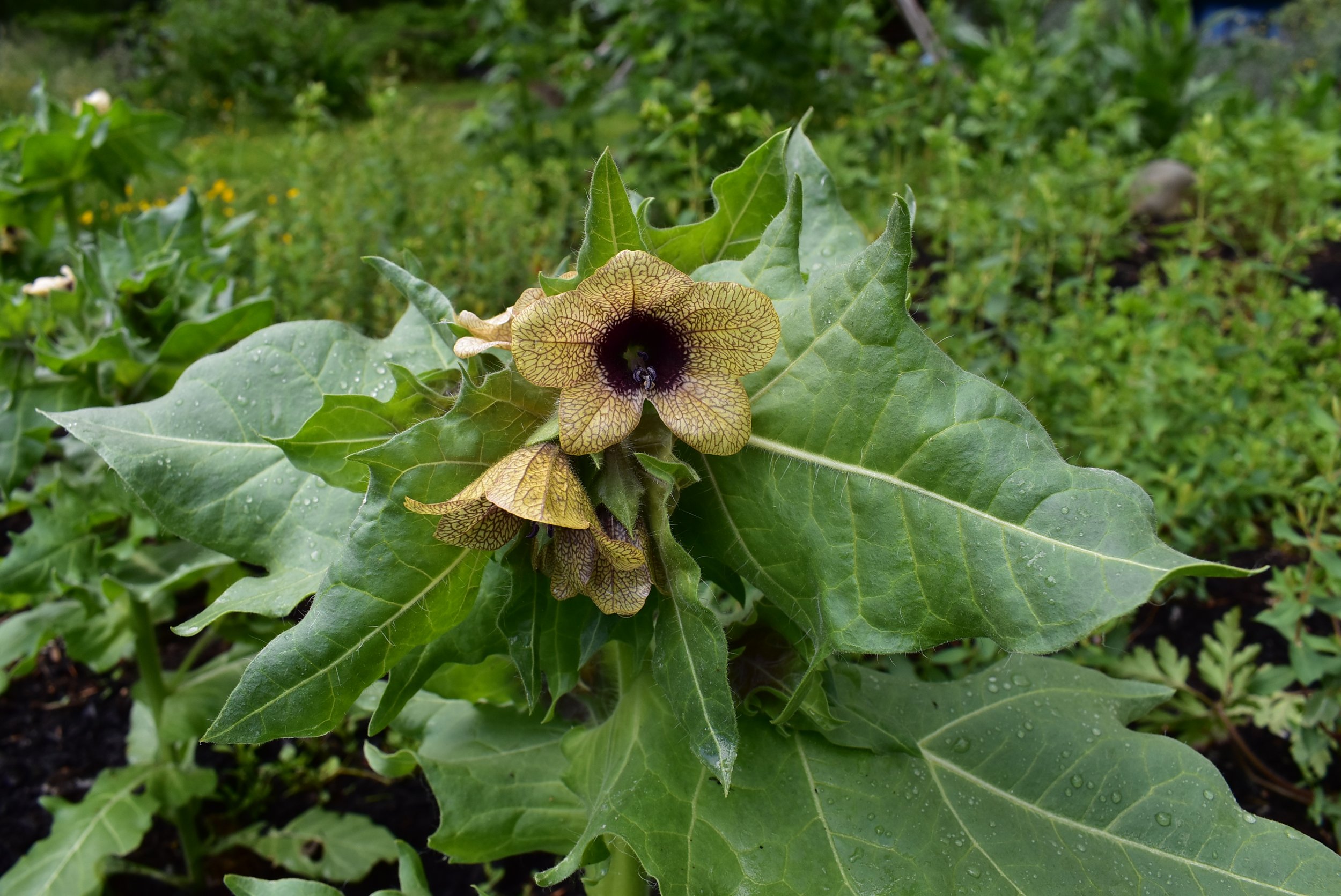 Image 2 of 8
 Image 3 of 8
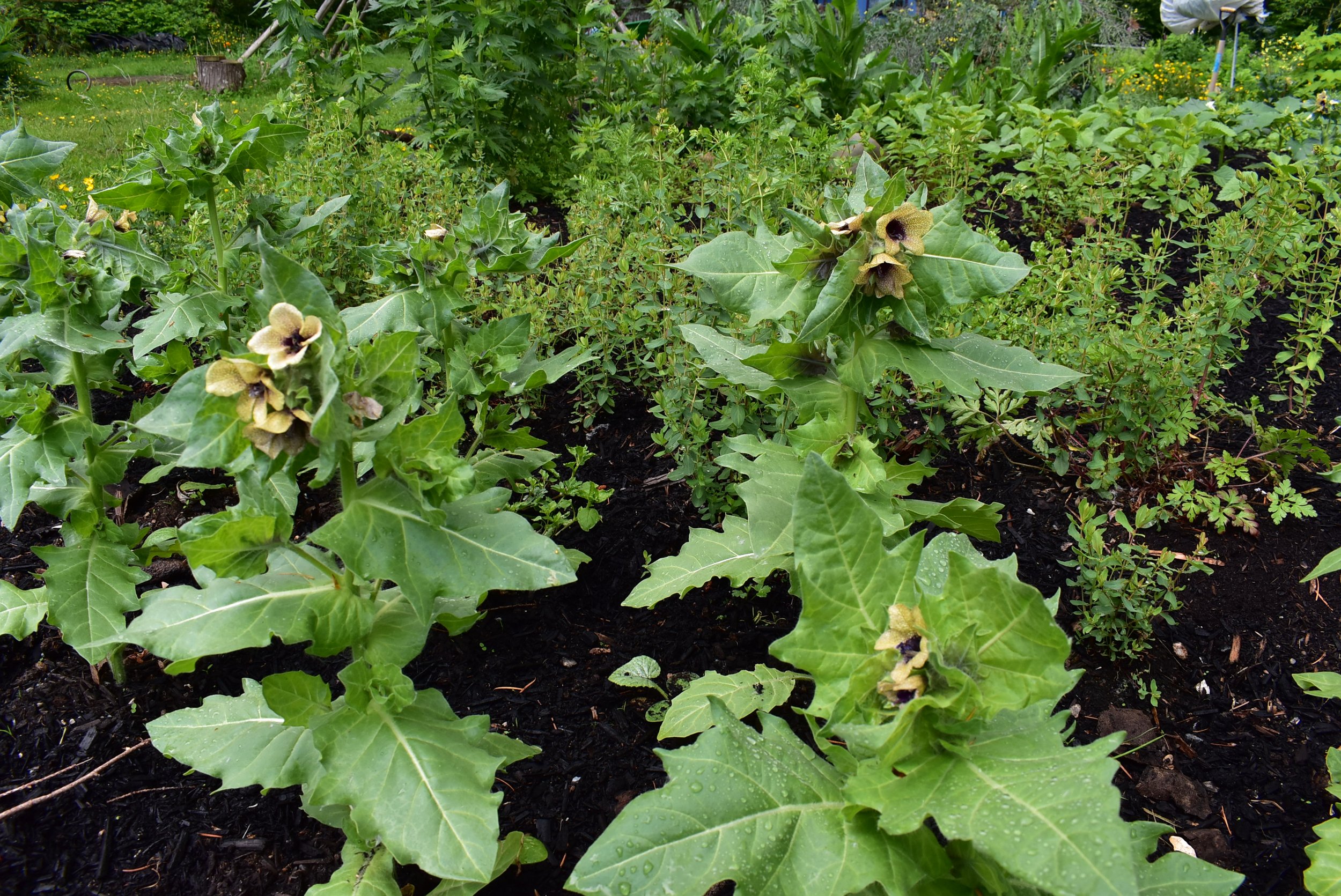 Image 4 of 8
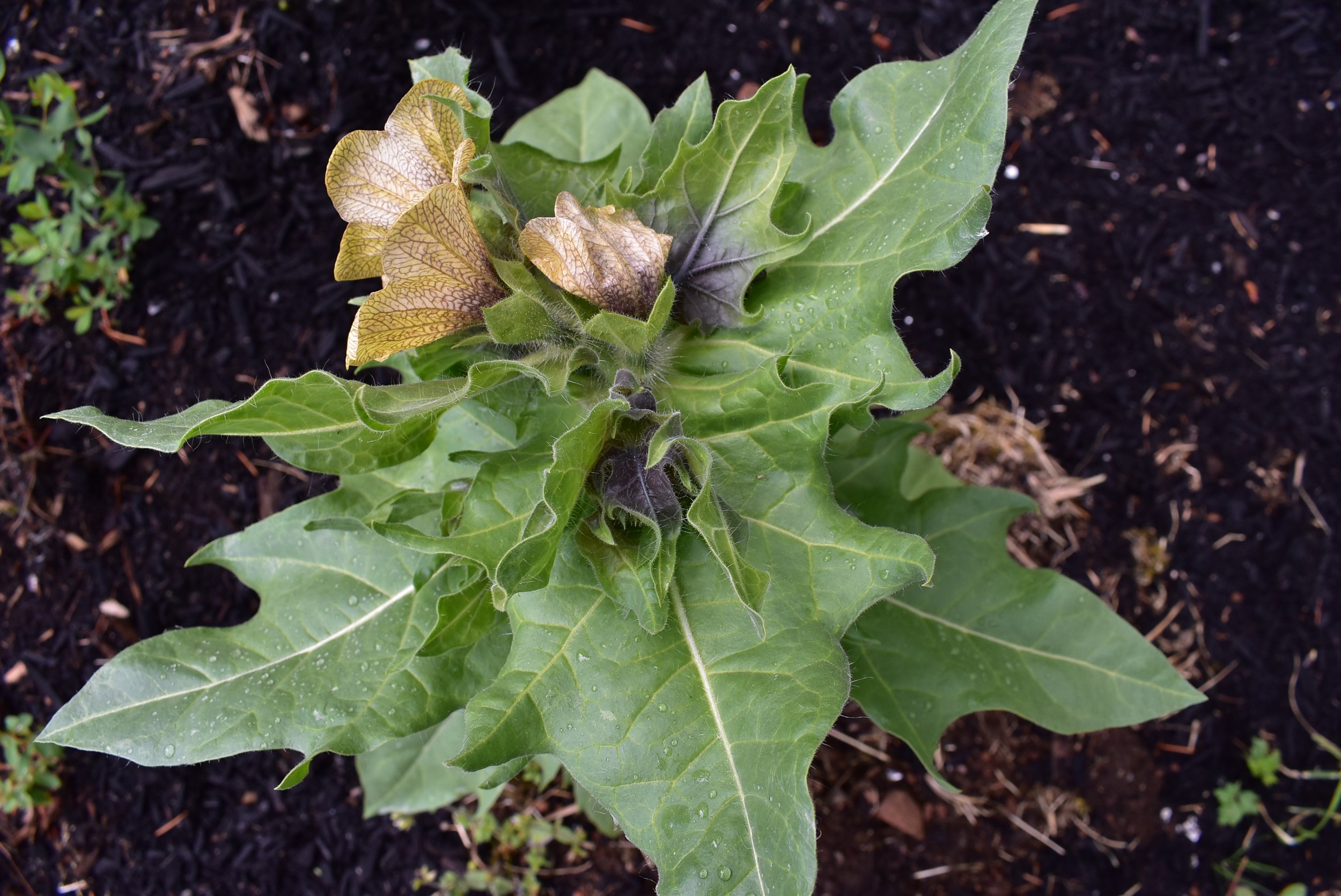 Image 5 of 8
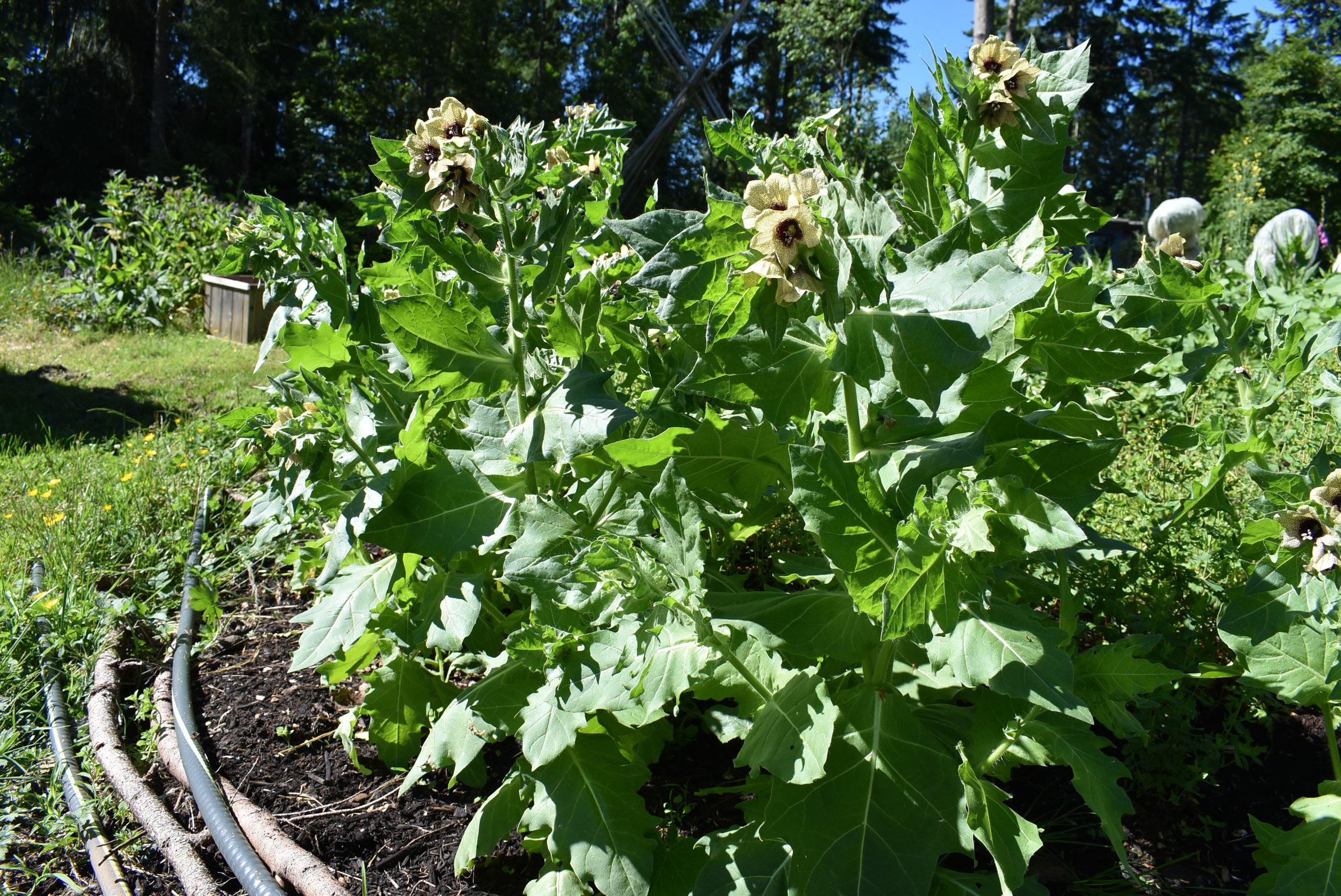 Image 6 of 8
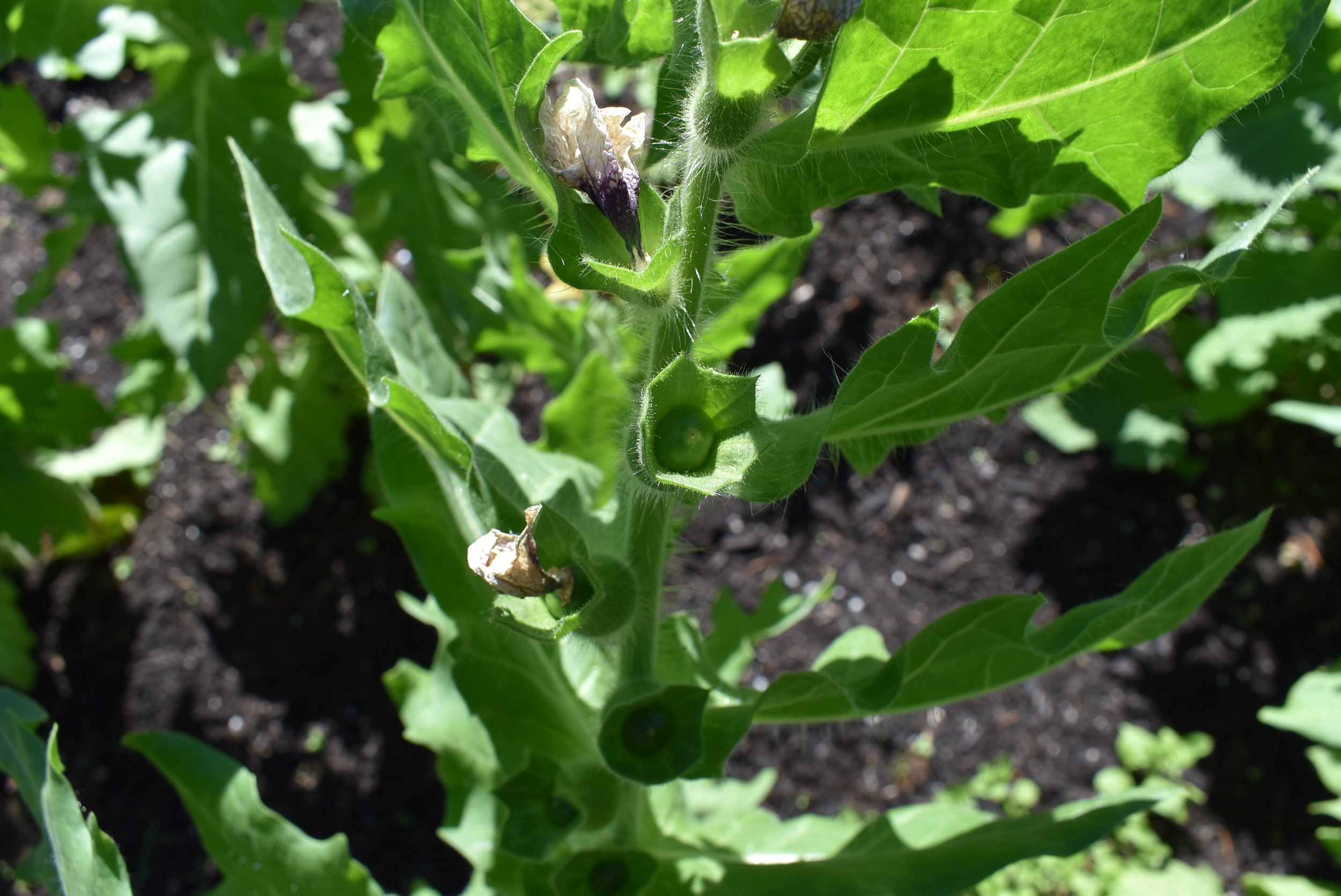 Image 7 of 8
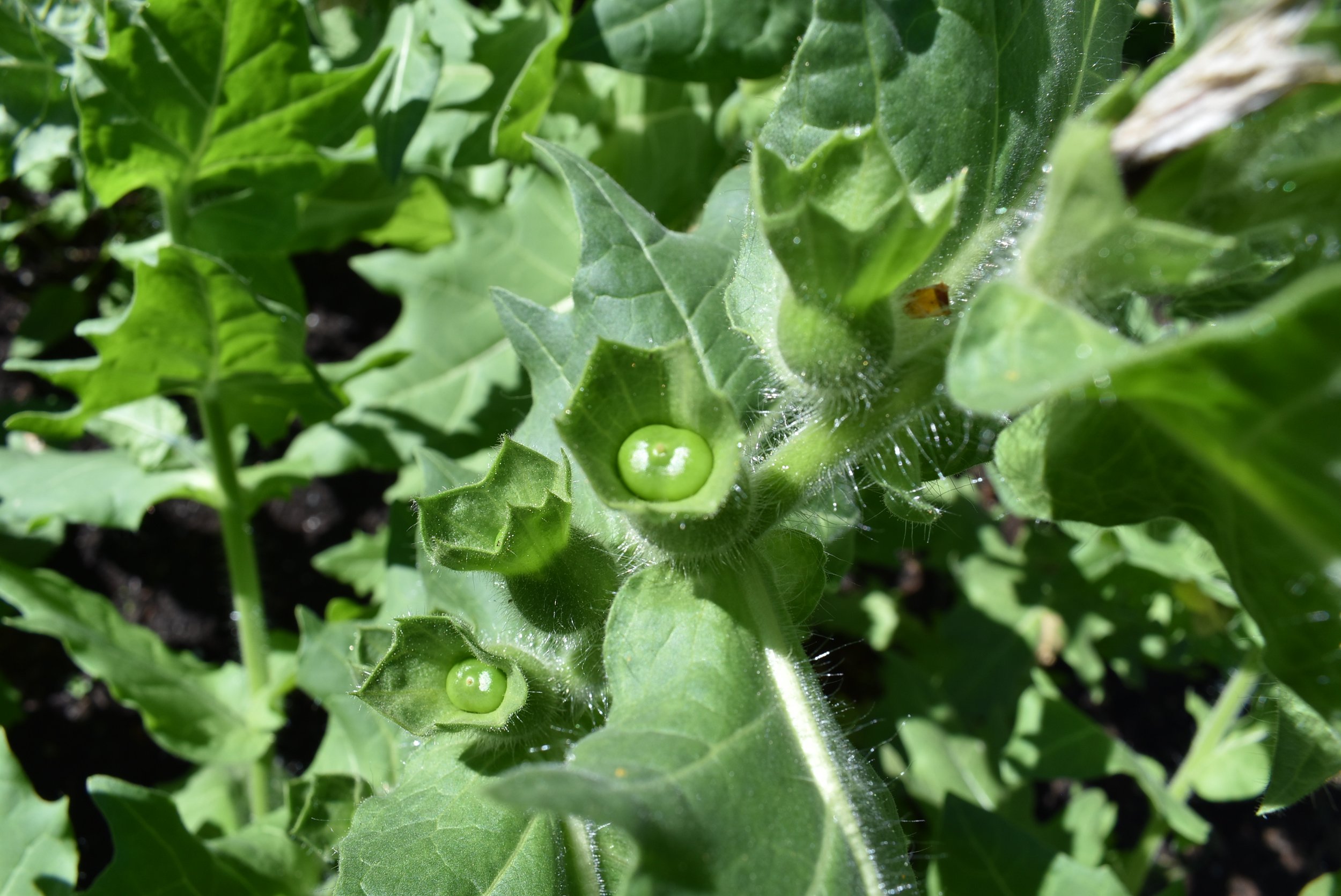 Image 8 of 8
Why Grow Henbane?
Henbane is grown today primarily for educational, historical, and ornamental interest. Its dramatic foliage and unusual flowers make it a compelling addition to apothecary gardens, medieval or folklore-inspired plantings, and collections of historically significant plants. Henbane also attracts pollinators during bloom and adds a powerful sense of story to the garden.
🌱
PLANT DETAILS
Common Names
Henbane
Botanical Name
Hyoscyamus niger
Plant Family
Solanaceae (Nightshade Family)
Native Range
Eurasia
Life Cycle
Annual/Biennial
Hardiness Zone
4-9
Habit
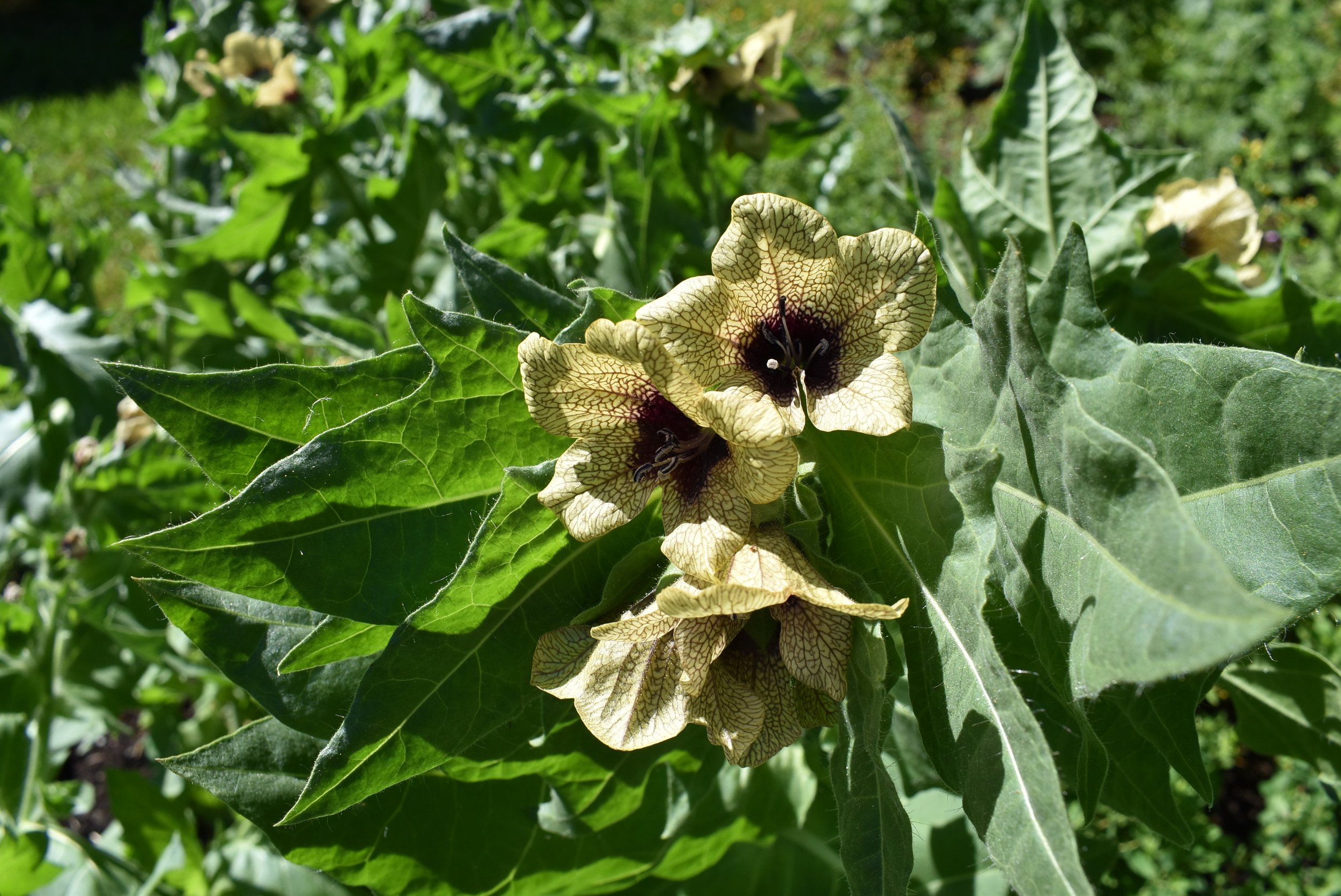
Annual, biennial or short-lived perennial forming a basal rosette of large, softly hairy grey-green leaves in the first year. In its flowering year, plants send up tall stems bearing pale yellow, purple-veined flowers, followed by distinctive seed pods. Plants can reach 2–3 feet tall.
Sun& Soil Requirements
Prefers full sun to partial shade and well-drained soil. Adaptable to poor or disturbed soils and often self-seeds lightly when conditions are favourable.
Germination & Sowing Instructions
The seeds germinate easily and can be sown indoors in flats and transplanted out once all danger of frost has passed.
Growing &Care
Low maintenance once established. Allow plants adequate space and avoid rich soils that encourage excessive leaf growth. Plants may self-seed; remove seed heads if spread is not desired.
Harvesting
Not applicable. Henbane is grown for ornamental, educational, and historical interest rather than harvest.
Culinary Uses
None. Henbane is not a culinary plant.
Medicinal Uses
Henbane has a rich history of magical and mythical uses. The leaves are the most potent part of the plant, and were used by ancients to induce sleep and relieve pain. It is said that even the mere scent of the plant is enough to induce giddiness and stupor. The whole plant is extremely toxic.
Themes
Apothecary Garden, Medieval Garden, Historical Herb, Ornamental Curiosity, Deer Resistant.