 Image 1 of 2
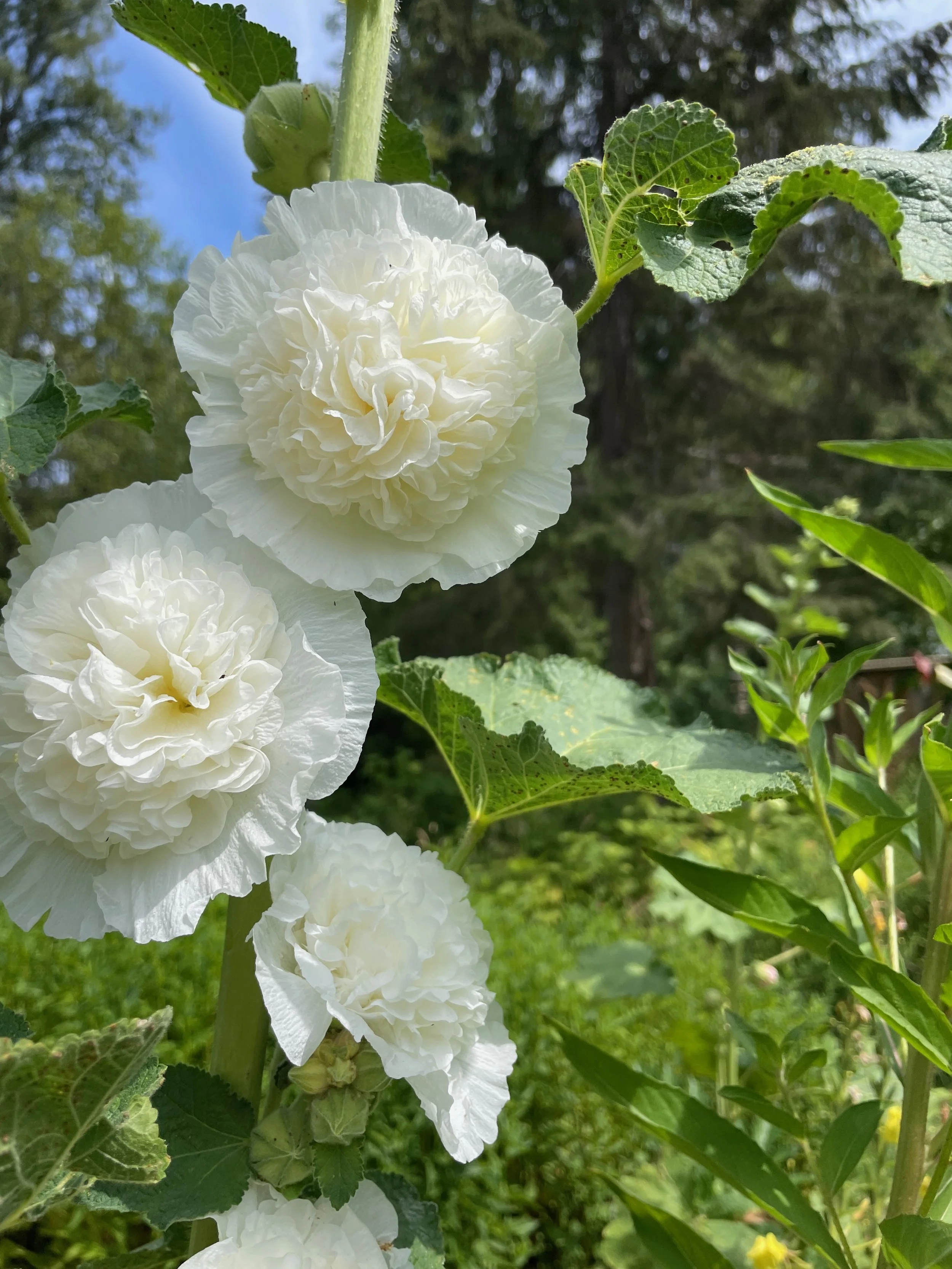 Image 2 of 2
Why Grow Double Hollyhock?
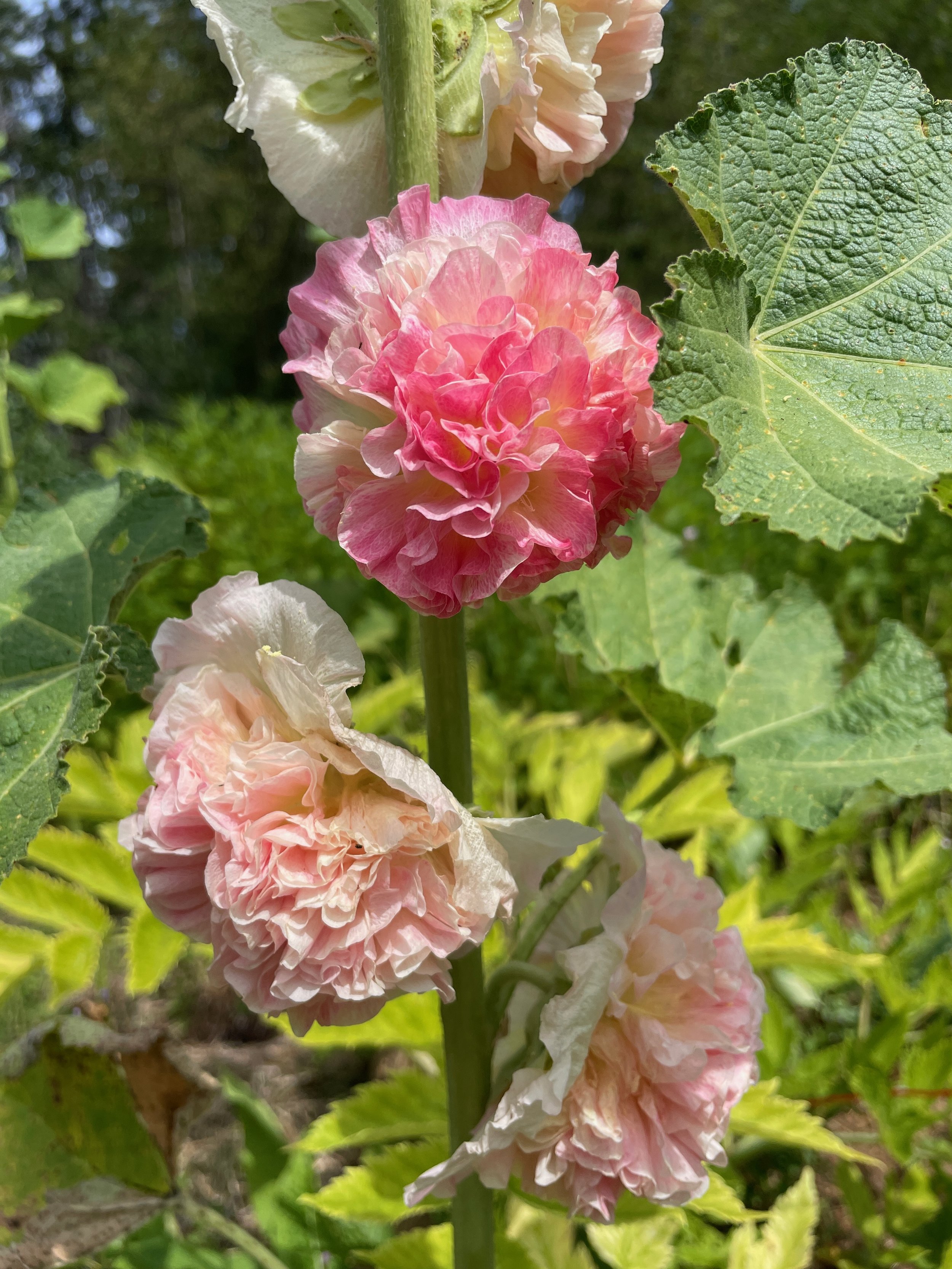
Double hollyhocks bring height, drama, and classic beauty to the garden, making them a favourite for cottage-style borders and cut flower gardens. In addition to their ornamental appeal, hollyhocks belong to the mallow family and share the gentle, soothing qualities found in many traditional apothecary plants. They are pollinator-friendly, deer resistant, and well suited to long-term garden plantings.
🌱
PLANT DETAILS
Common Names
Double Hollyhock
Botanical Name
Alcea rosea
Plant Family
Malvaceae (Mallow Family)
Native Range
Europe and Western Asia.
Life Cycle
Perennial or Biennial
Hardiness Zone
3-9
Habit
Tall, upright flowering plant reaching 6–8 feet tall. Produces large, fully double, ruffled blooms in a wide range of colours along sturdy central stalks. Flowers in mid to late summer and provides strong vertical interest in cottage and border gardens.
Sun & Soil Requirements
Prefers full sun and moist, fertile soil. Plants perform best with consistent moisture throughout the growing season.
Germination & Sowing Instructions
Seeds germinate easily and may be direct sown outdoors in fall or spring. Seeds can also be started in flats in spring and transplanted once seedlings are established.
Growing & Care
Low maintenance once established. Provide regular watering, especially during dry periods. Plants may be cut back in fall after flowering has finished.
Harvesting
Leaves and flowers may be gathered while plants are in bloom.
Culinary Uses
Young leaves and flowers may be added to salads or used as a mild edible garnish.
Medicinal Uses
Hollyhock has similar properties as other Mallow Family members such as Marshmallow. The leaves, flowers and roots are soothing to irritated tissues.
Themes
Apothecary Garden, Low Maintenance, Deer Resistant, Attracts Pollinators, Cut Flowers.