 Image 1 of 5
 Image 2 of 5
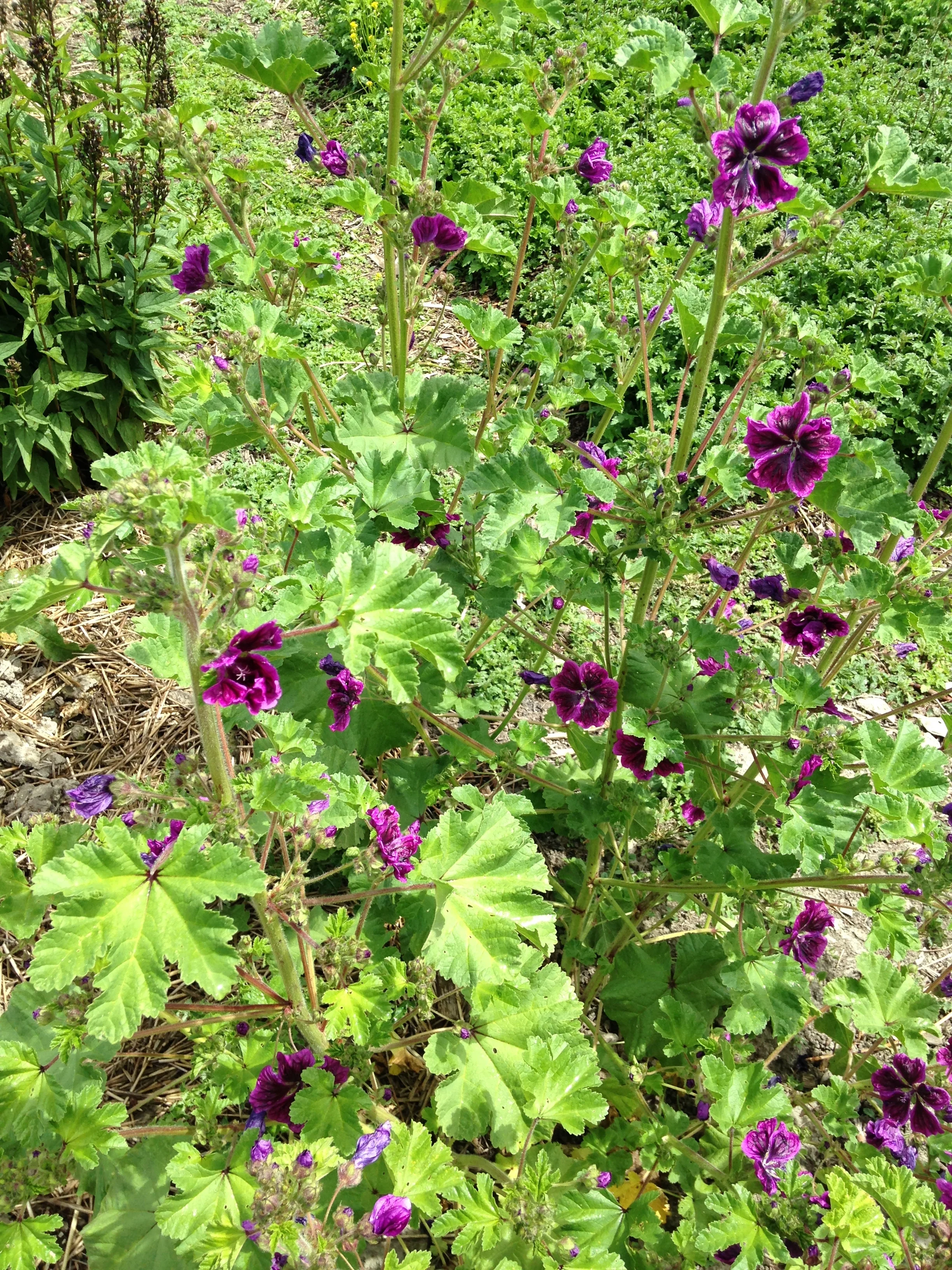 Image 3 of 5
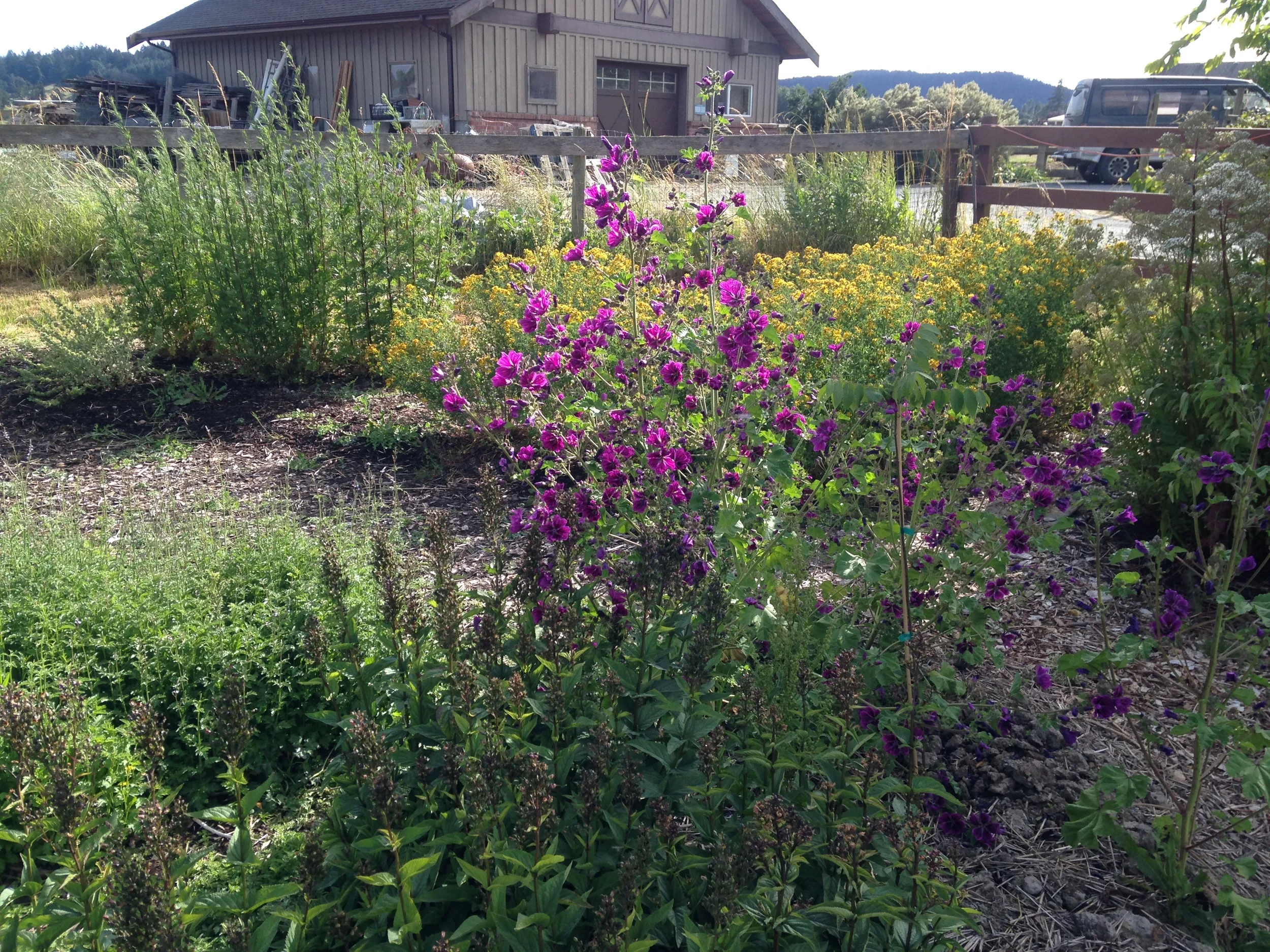 Image 4 of 5
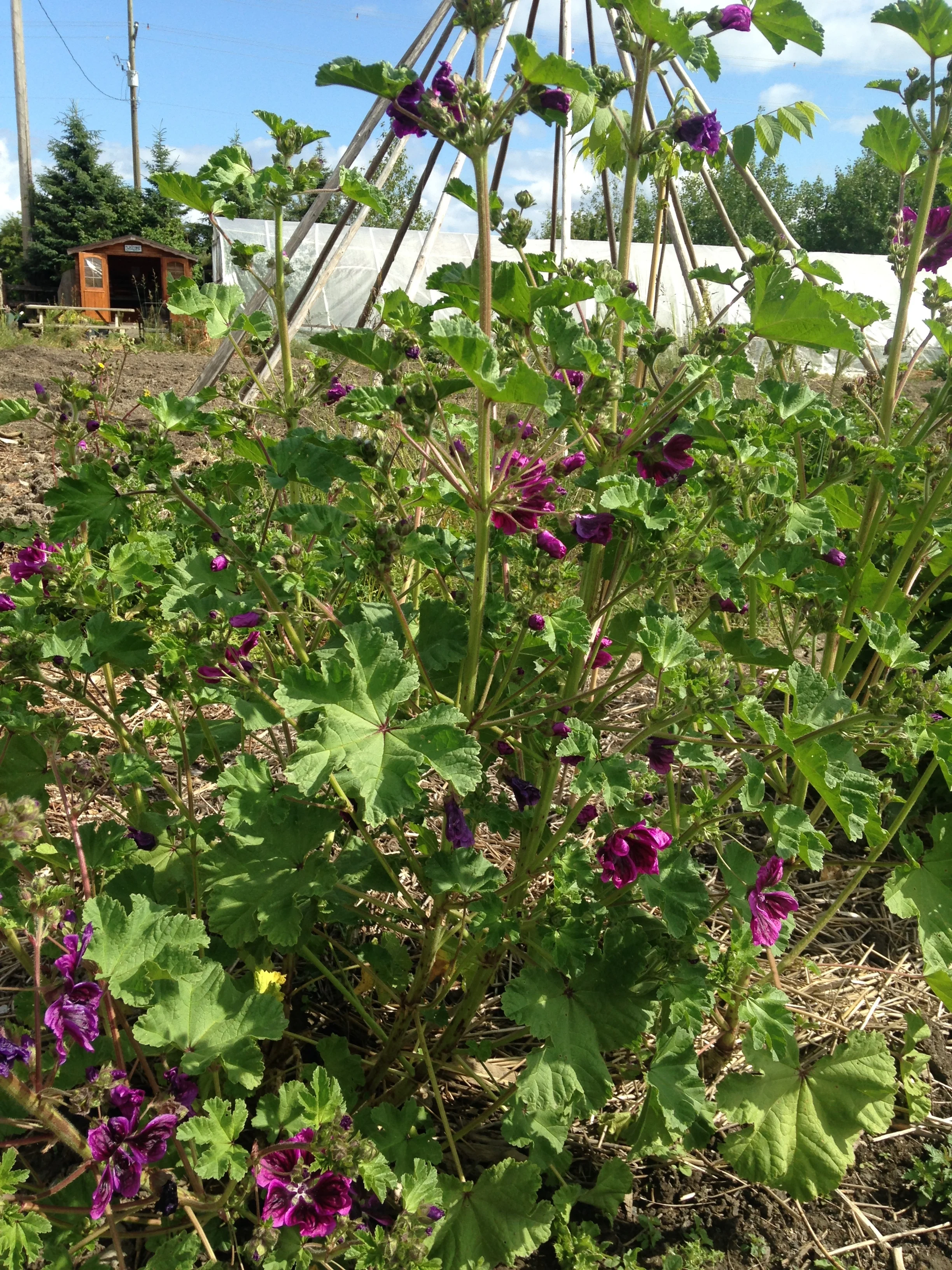 Image 5 of 5
Why Grow French Hollyhock?
French hollyhock is an easy, generous plant that bridges ornamental beauty and practical use. Its vibrant flowers support pollinators, while its edible leaves and soothing mucilaginous properties make it a valuable addition to edible landscapes and apothecary gardens. Plants readily self-seed, creating a relaxed, natural presence year after year.
🌱
PLANT DETAILS
Common Names
French Hollyhock, High Mallow
Botanical Name
Malva syvestris
Plant Family
Malvaceae (Mallow Family)
Native Range
Europe
Life Cycle
Perennial
Hardiness Zone
4-9
Habit
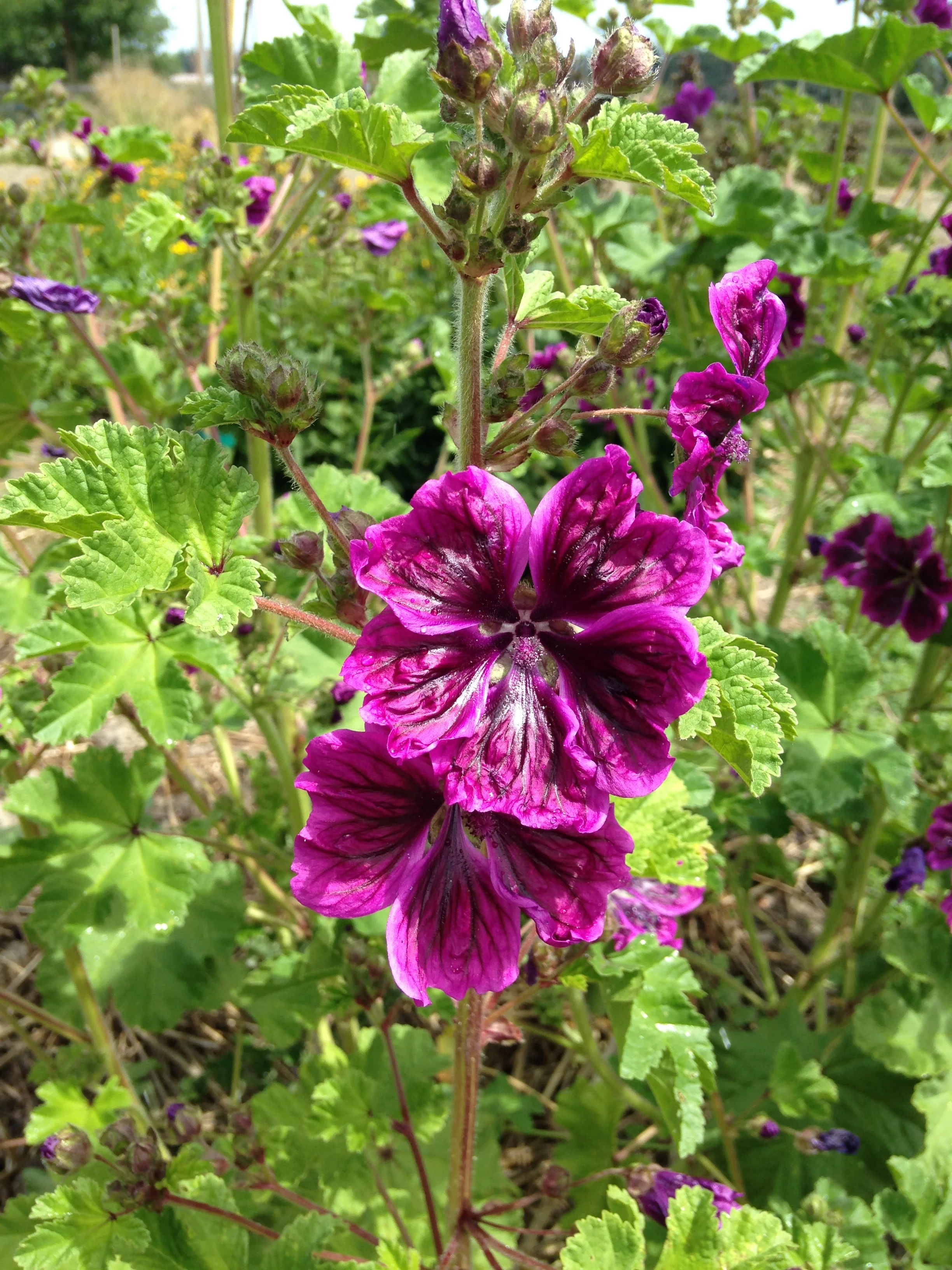
French Hollyhock is a showy perennial reaching up to 4 feet in height, and blooms prolifically from mid-May through until July. It puts on quite a show around mid-June the garden with its delicate velvety flowers. The deep magenta coloured flower petals are streaked with dark purple veining and have a crinkled, slightly shiny, very silky appearance that is sumptuous looking. Like a royal queen in the garden, High Mallow has many of us adoring its graceful beauty.
Sun & Soil Requirements
Prefers full sun to partial shade and grows well in most garden soils. Performs best in moderately fertile, well-drained soil with regular moisture, though plants are adaptable once established.
Germination & Sowing Instructions
Direct sow outdoors in early spring after danger of frost has passed, or start indoors and transplant once seedlings are established. Seeds germinate readily and benefit from consistent moisture during early growth.
Growing & Care
Easy to grow and low maintenance. Water during extended dry periods to encourage lush growth and prolonged flowering. Plants may self-seed freely if allowed to mature.
Harvesting
The leaves and flowers are harvested for use in the summer, the roots are dug in the fall.
Culinary Uses
The entire plant is edible. The flowers are beautiful and mild-tasting in salads. A useful food plant, the young leaves were very popular cooked as a vegetable in 19th century Europe. Leaves may be added to soups or stews, where their mild flavour and mucilaginous quality help thicken broths.
Medicinal Uses
French Hollyhock has a long history of use in European folk medicine for its soothing mucilage content. The leaves, seeds, and roots can be harvested and used for their demulcent and emollient properties. A cold infusion is especially nice to soothe sore throats and dry coughs.
A poultice of the fresh leaves or roots can be applied to soothe skin irritations such as rashes, chapped skin, eczema, or contact dermatitis. Similar in medicinal properties to Marshmallow (Althea officinalis) but considered milder, French Hollyhock is also useful in digestive disorders such as heartburn, indigestion, colitis, and stomach ulcers.
The flowers, though less medicinally potent than other plant parts, look very lovely in tea blends and lend their gorgeous deep magenta colour to your herbal infusions.
This species of Mallow has also been used to produce natural yellow, cream, and green dyes.
Like other Mallow Family members, High Mallow is a valuable species that provides both pollen and nectar to our precious bees.
Themes
Apothecary Garden, Low Maintenance, Deer Resistant, Attracts Pollinators, Cut Flowers.