 Image 1 of 1
Why Grow Orange King Calendula/
Calendula is one of the most versatile and rewarding plants for the home garden. ‘Orange King’ offers rich colour, long bloom time, and reliable performance, making it a staple of apothecary gardens, edible landscapes, and pollinator plantings. Easy to grow and quick to flower, calendula provides continuous harvests of petals while supporting beneficial insects.
🌱
PLANT DETAILS
Common Names
Orange King Calendula, Dark Orange Calendula
Botanical Name
Calendula officinalis ‘Orange King’
Plant Family
Asteraceae (Daisy Family)
Native Range
Southern Europe
Life Cycle
Annual
Hardiness Zone
2-11
Habit
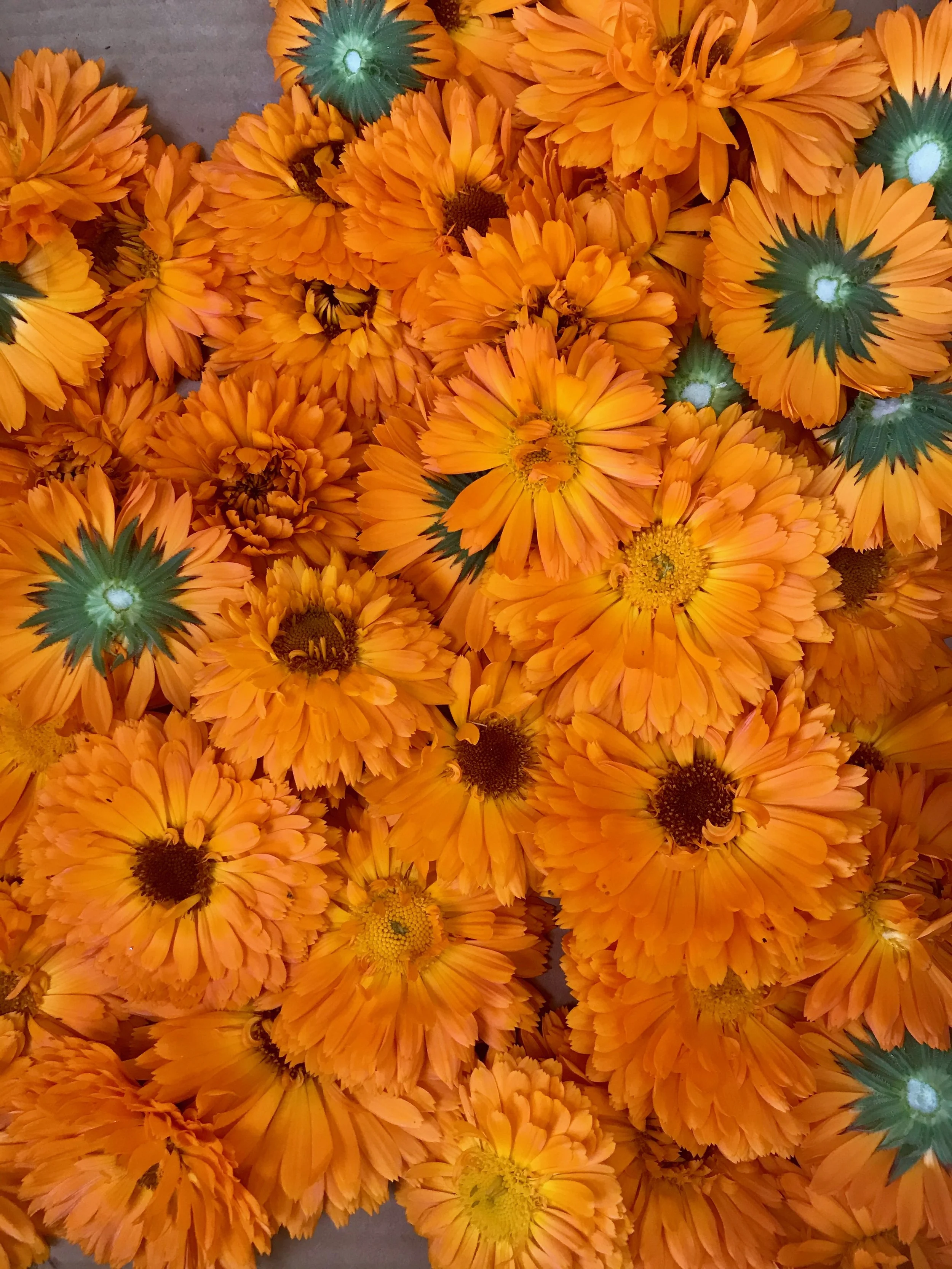
Attractive variety with ornamental value as well as traditional medicinal value. Fast-growing annual reaching 18–24 inches tall. Produces abundant, consistently fully double, deep orange flowers held above soft, lightly aromatic green foliage. Blooms continuously from early summer until frost if regularly harvested. Highly attractive to pollinators.
Sun/Soil
Prefers full sun but tolerates light shade. Grows best in well-drained, moderately fertile soil. Calendula is adaptable and performs well in garden beds, borders, and containers.
Germination/Sowing
Seeds can be direct sown in spring or fall, or started in flats and transplanted out. Calendula is a really great 'starter herb' for your home apothecary garden, it has large seeds that are easy to handle and germinate. These large seeds look a little like tiny alligators, so it's a fun one for kids to plant too.
Growing/Care
Easy to care for annual. The plants are shallow rooted and they do require a few waterings throughout the hot season. Deadheading, or harvesting the flowers, will prevent self-seeding if you wish to avoid this. Otherwise you can look forward to having Calendula plants return year after year.
Harvesting
Harvesting Calendula is a little like harvesting sunshine. The flowers are the medicinal part used. The entire flower head can be plucked easily from the plant and then used fresh or laid out to dry. The flowers are most medicinally potent in the heat of summer.
Culinary Uses
The flowers are entirely edible and can be used to decorate your plate. The petals add some colour and sunshine sprinkled in garden salads. The flowers are also sometimes used to colour cheese, or as a substitute for saffron.
Medicinal Uses
Calendula is well know is the Western herbal materia medica for its skin healing properties. When steeped in oil, the bright orange and yellow flowers offer their sunny colours to the oil lending it a glow like liquid gold. With an affinity for the epithelial cells of the body, Calendula oil can be applied topically to heal chapped skin, rashes, fungal infections, eczema, wounds, and all that ails the skin.
More than just a topical herb, Calendula tea or tincture can be taken internally to heal the lining of the gut, or our 'inner skin'. It can be useful for treating Candida overgrowth, and healing intestinal hyperpermeabilty (aka Leaky Gut Syndrome) which can in turn help us heal from autoimmunity and allergies (Calendula's action as a lymphagogue and gentle liver stimulant also work great here too.)
Themes
Attracts Pollinators, Deer Resistant, Apothecary Garden, Drought Tolerant, Low Maintenance, Cut Flowers.