 Image 1 of 1
Why Grow Patience Dock?
Patience dock is an exceptionally resilient and generous perennial, returning reliably year after year with minimal care. It provides abundant early spring greens when little else is available and develops a deep root system that makes it drought-tolerant once established. Valued historically in European kitchen and apothecary gardens, patience dock is well suited to permaculture plantings, food forests, and home apothecaries.
🌱
P[LANT DETAILS
Common Names
Patience Dock, Patience Sorrel
Botanical Name
Rumex patientia
Plant Family
Polygonaceae (Knotweed Family)
Life Cycle
Perennial
Native Range
Europe and Western Asia
Hardiness Zone
4-8
Habit
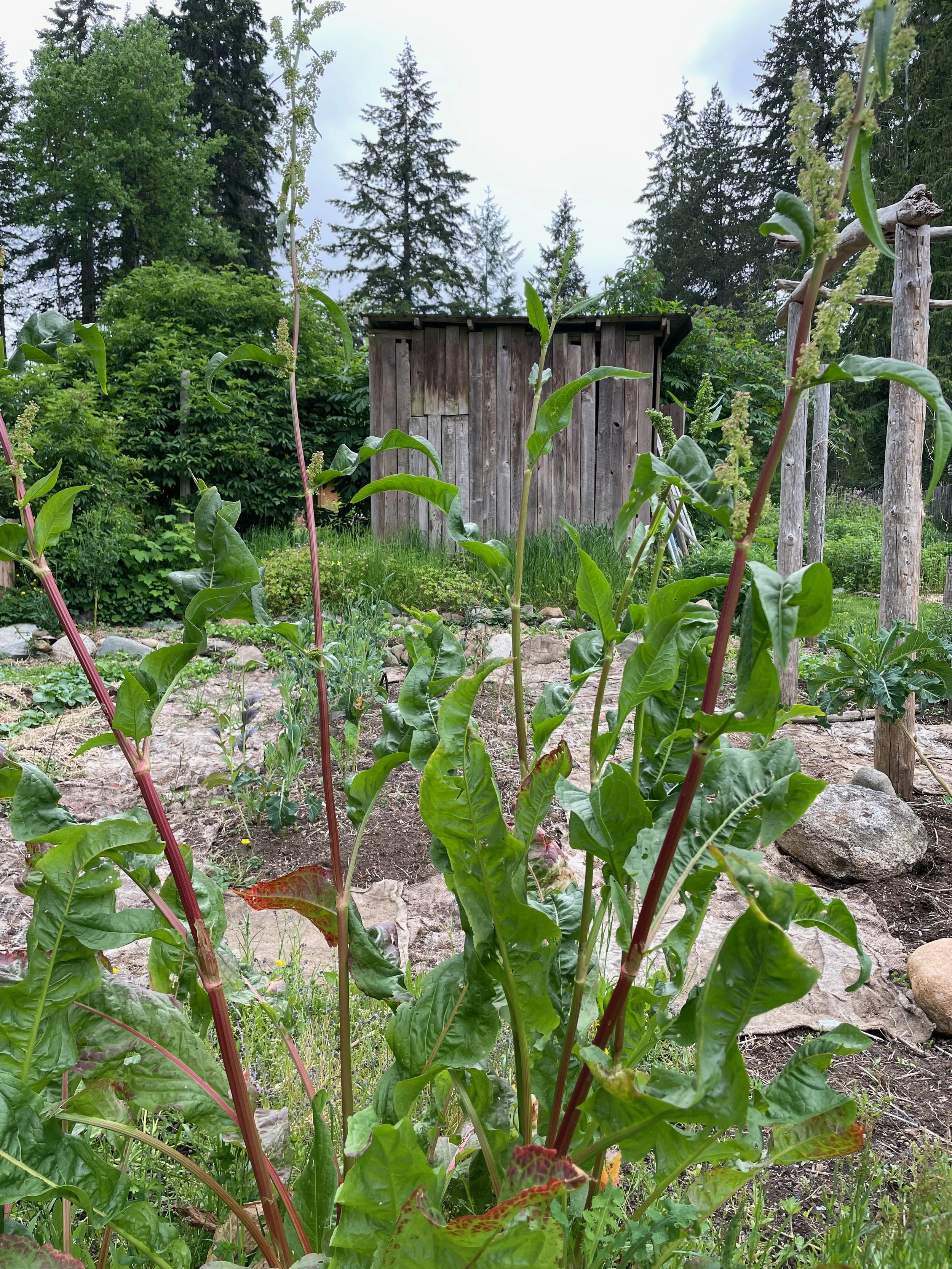
Robust herbaceous perennial reaching 3–5 feet tall. Large, smooth, lance-shaped green leaves form a dense basal clump, followed by tall flowering stalks bearing branched clusters of reddish-brown seed heads. Vigorous and long lived.
Sun & Soil Requirements
Patience dock grows well in full sun to partial shade and prefers deep, fertile, well-drained soil with consistent moisture. Tolerant of a range of soils once established.
Germination & Sowing Instructions
Direct sow outdoors in early spring or fall, or start indoors and transplant once seedlings are established. Seeds germinate readily in cool soil. Germination typically occurs within 7–14 days under favourable conditions.
Growing & Care
Easy to grow and low maintenance. Water during extended dry periods, especially in the first year. Plants can be cut back after flowering to encourage fresh leaf growth. Once established, patience dock is highly resilient and long lived.
Harvesting
Young leaves are best harvested in spring before flowering for culinary use. Leaves become tougher and more bitter as the season progresses. Seed heads may be collected once fully mature and dry.
Culinary Uses
Young leaves are traditionally used as a cooked green, similar to spinach or sorrel, and were historically valued as an early-season vegetable.
Medicinal Uses
Patience dock has a history of use in European herbal traditions, particularly for supporting digestion and gentle cleansing. The root has been used traditionally in herbal preparations and is considered milder than its cousin Yellow Dock (Rumex crispus).
Themes
Apothecary Garden, Edible Perennial, Easy to Grow, Traditional European Herb.