 Image 1 of 6
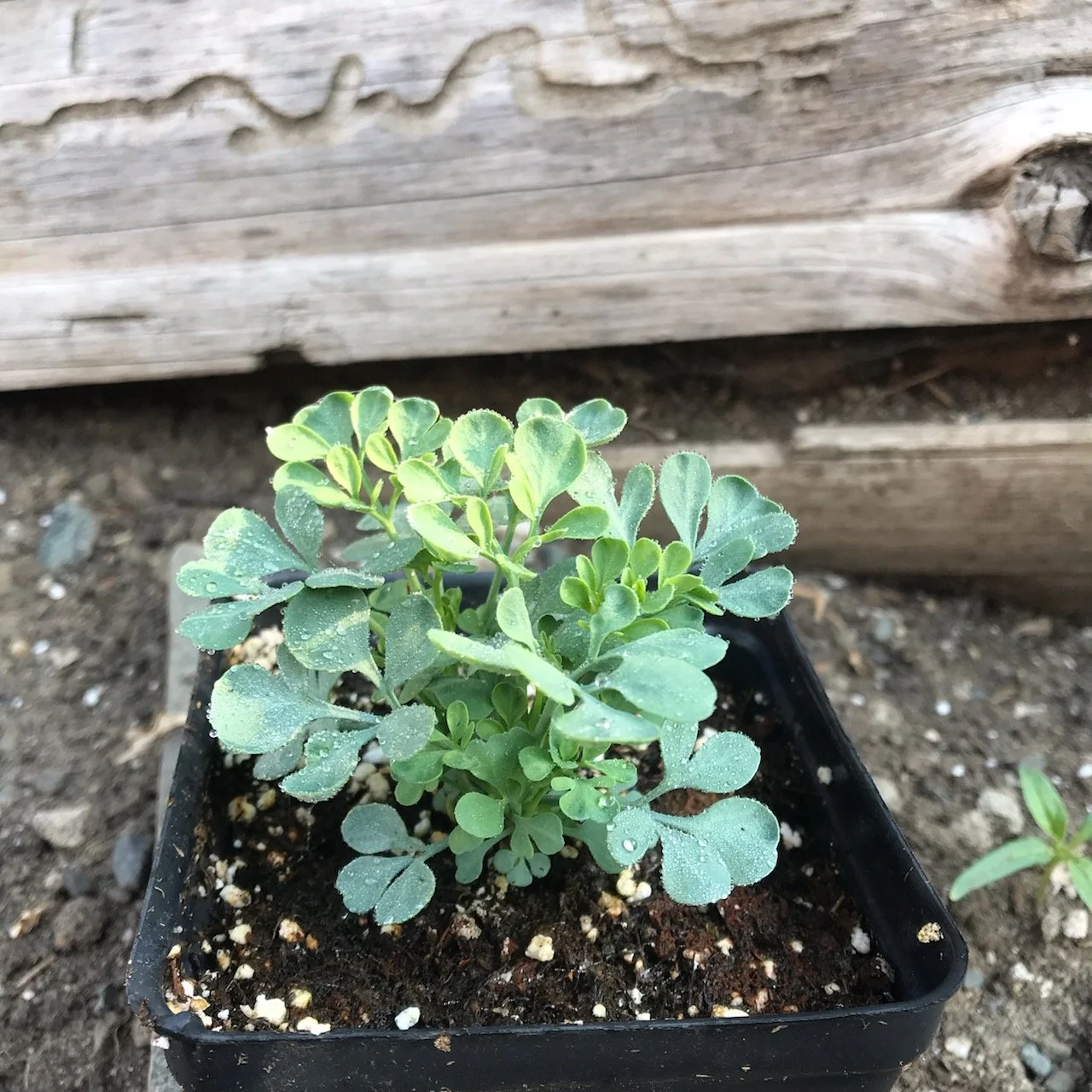 Image 2 of 6
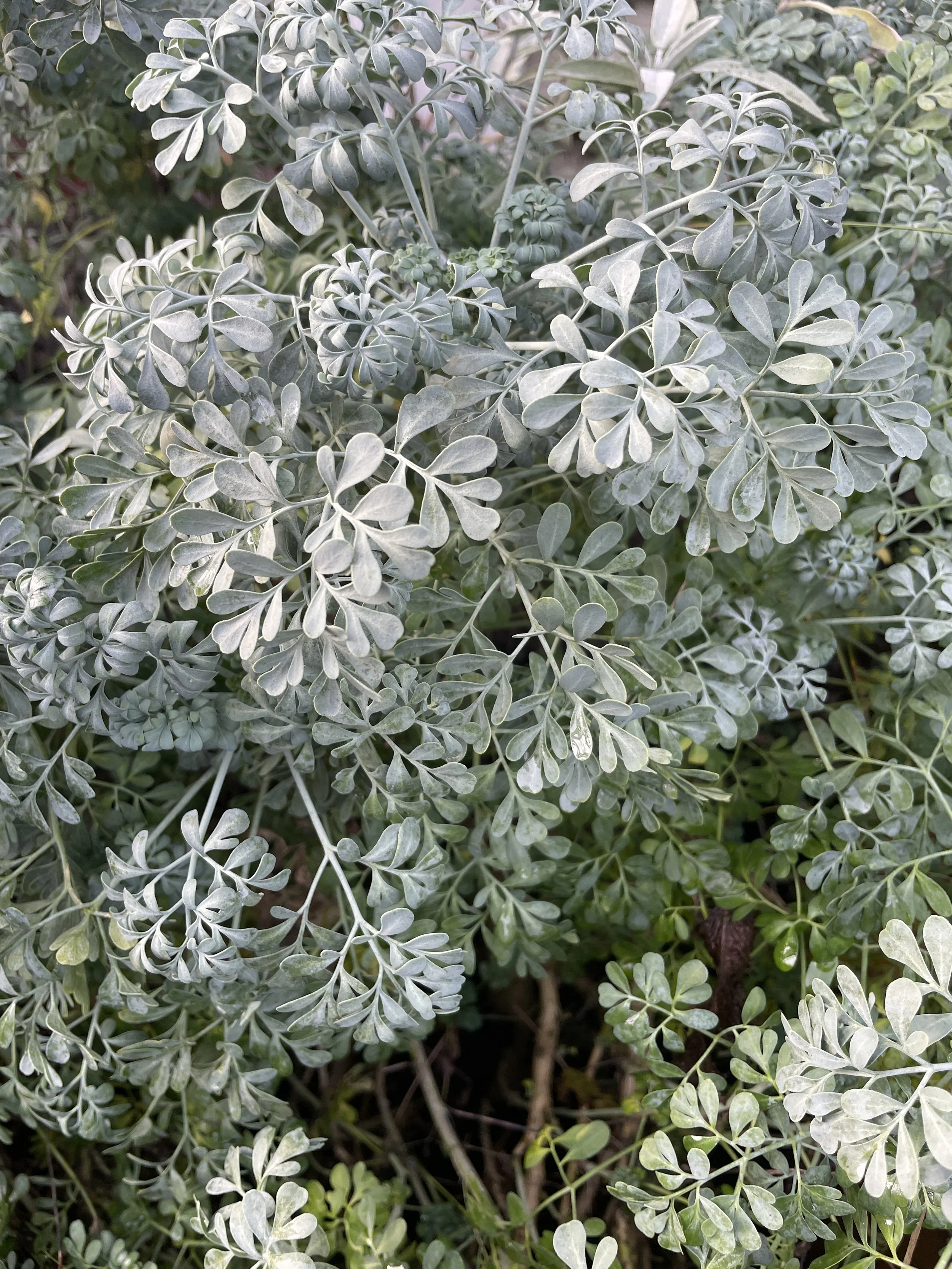 Image 3 of 6
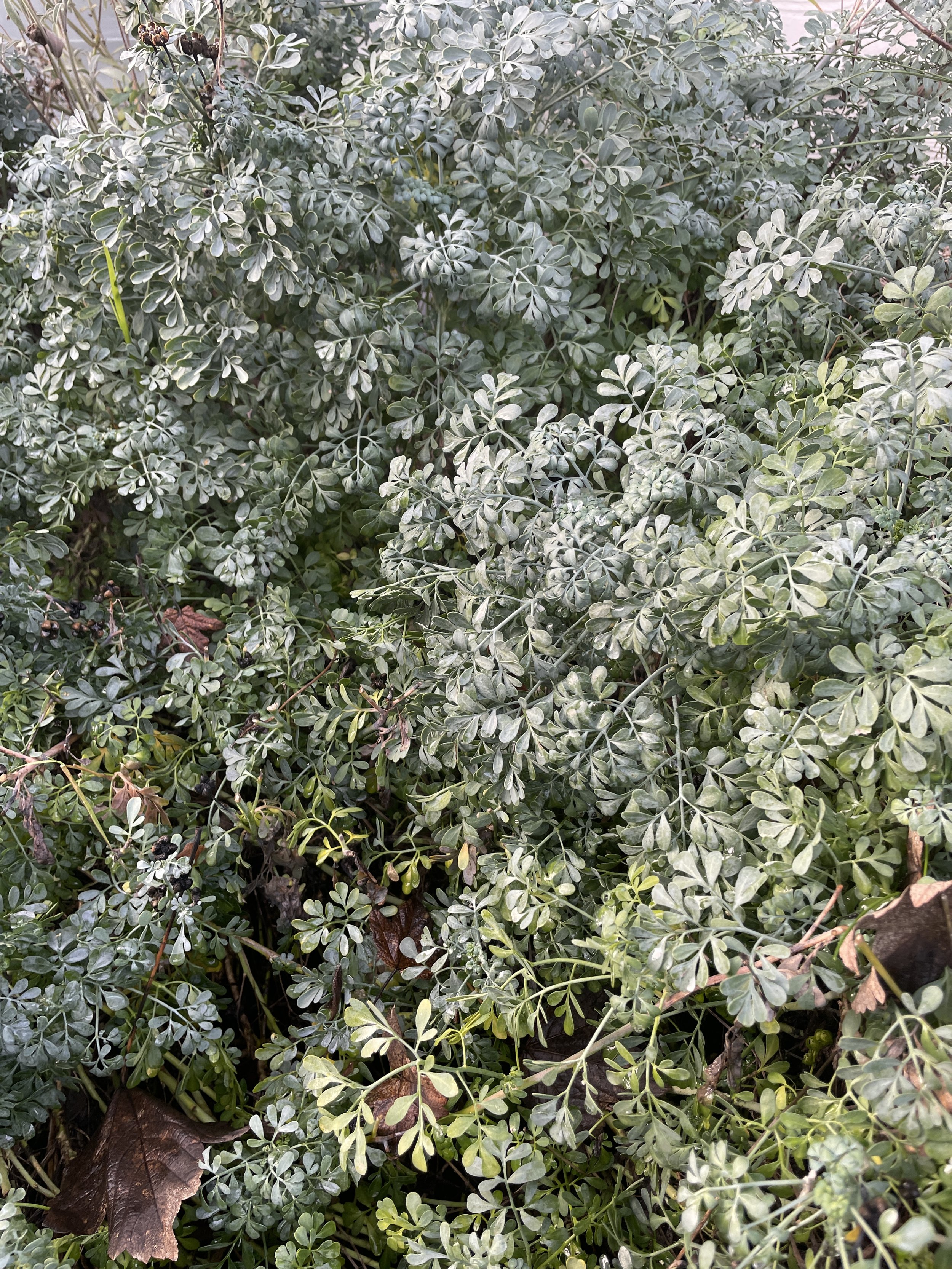 Image 4 of 6
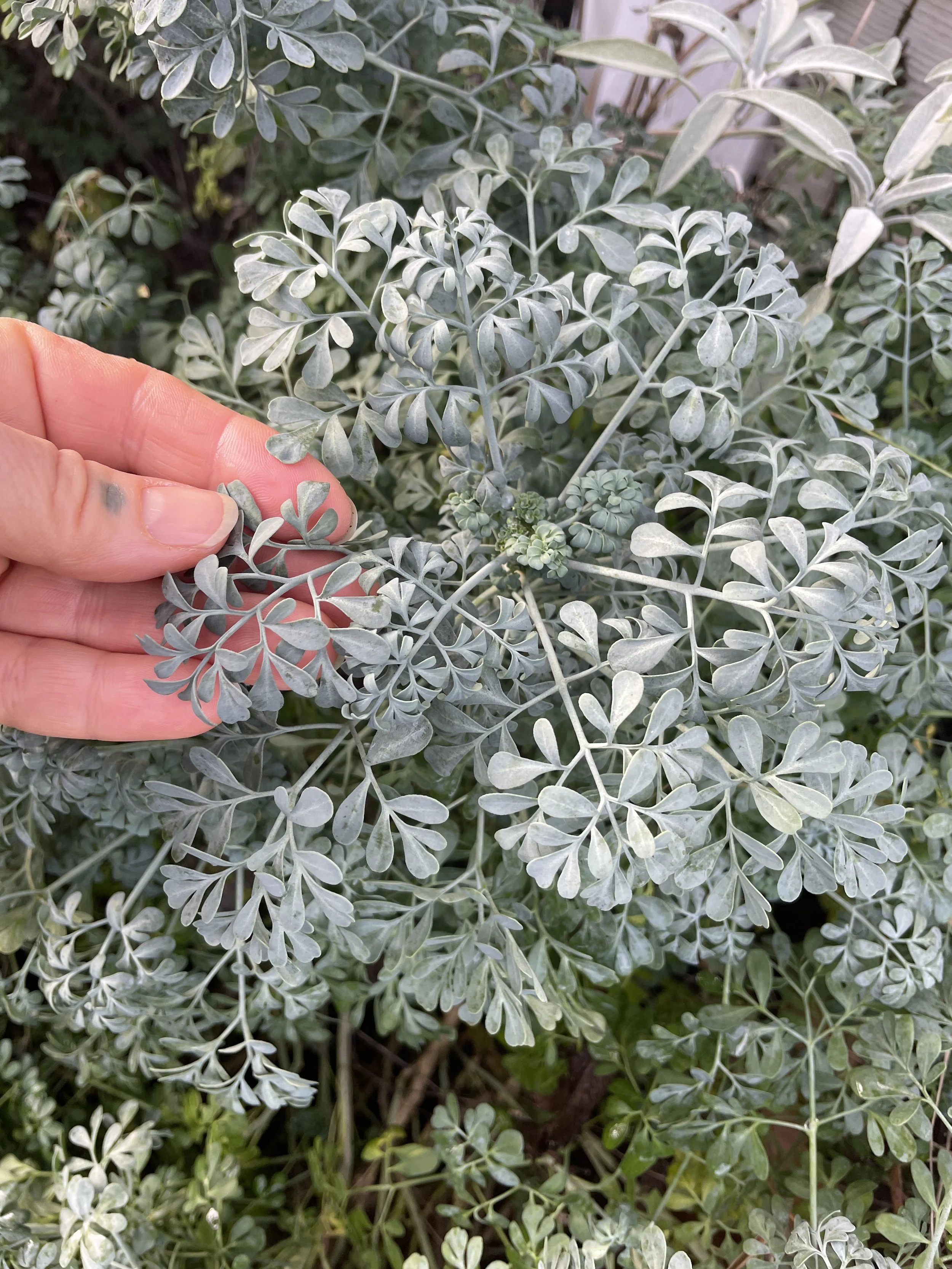 Image 5 of 6
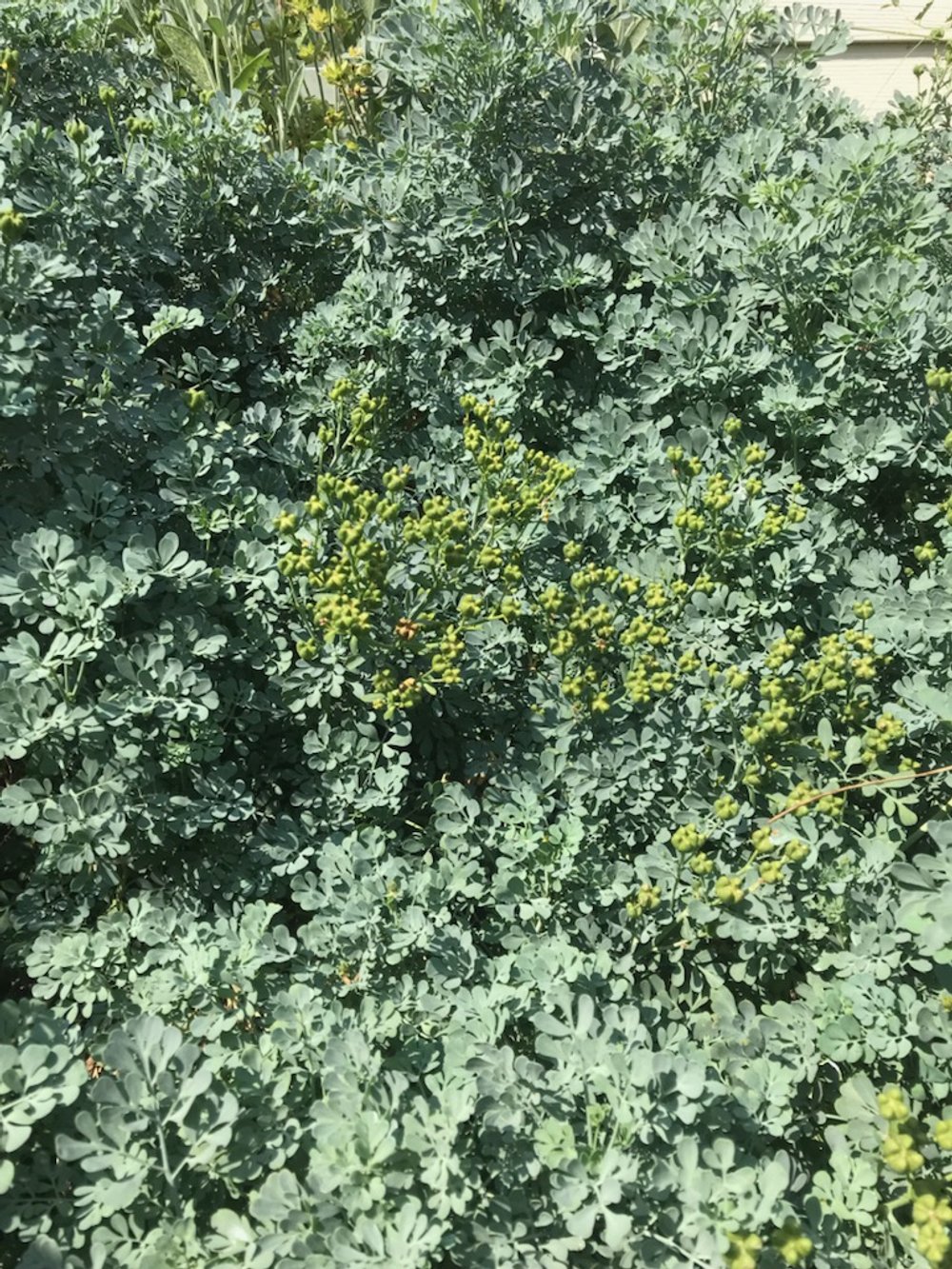 Image 6 of 6
Why Grow Rue?
Rue is a plant best grown intentionally and with respect for its long and complex history. Traditionally included in apothecary and monastery gardens, it is valued for its strong scent, resilience, and cultural significance. Rue is drought tolerant once established, unappealing to deer, and well suited to dry, sunny garden sites where many other herbs struggle.
🌱
PLANT DETAILS
Common Names
Common Rue, Herb of Grace
Botanical Name
Ruta Graveolens
Plant Family
Rutaceae (Citrus Family)
Native Range
Europe, especially the Mediterranean
Life Cycle
Perennial
Hardiness Zone
5-9
Habit
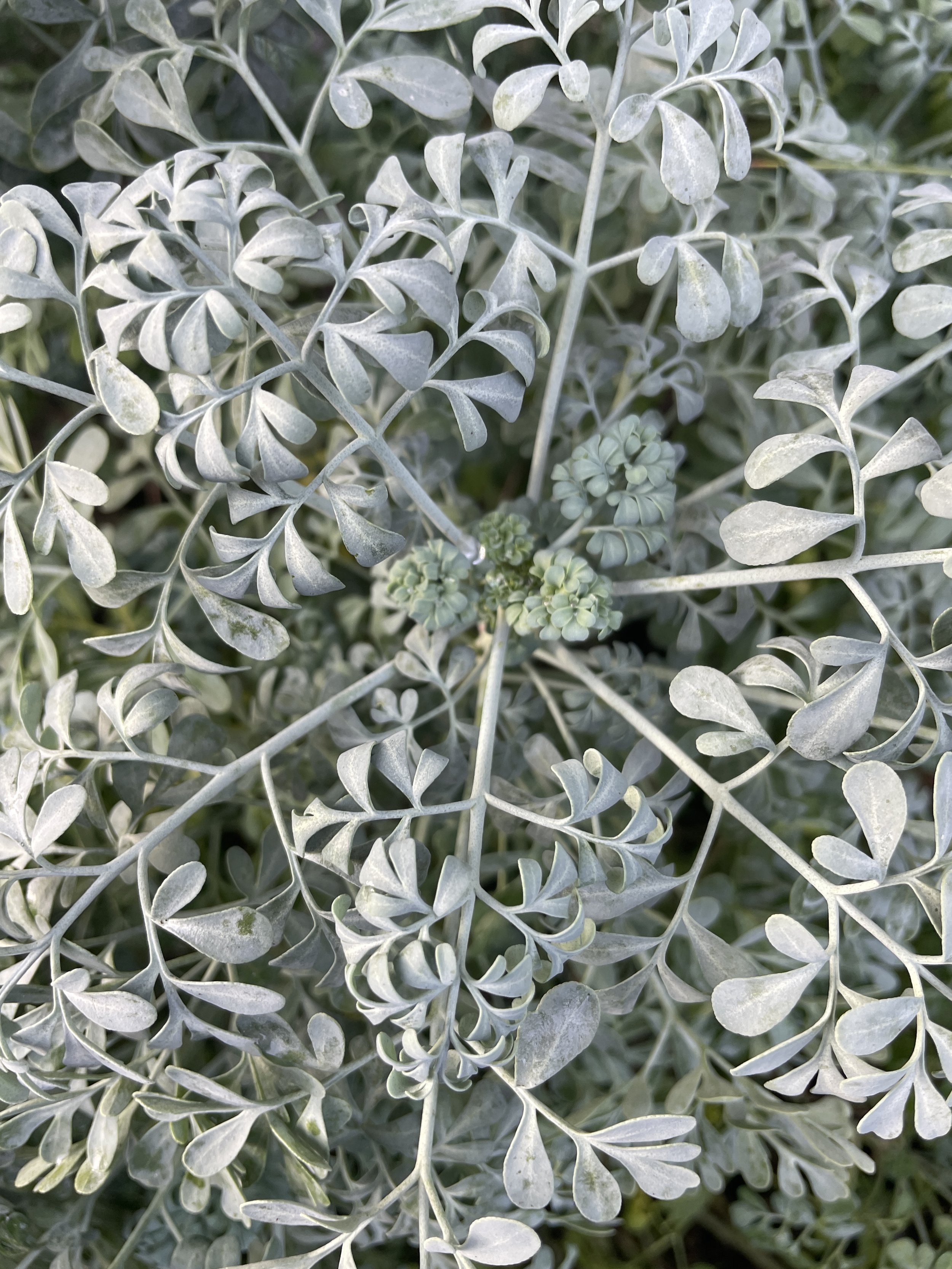
Rue is a perennial herb known for its strongly aromatic, bluish-green, finely lobed foliage and small yellowish-green flowers that bloom from mid-summer to early fall. Evergreen woody perennial. Grows to 3ft tall. It is also a host plant for Black Swallowtail, Anise Swallowtail, and Giant Swallowtail butterflies.
Sun/Soil
Full sun, well-drained sandy soil. Will tolerate part shade.
Germination/Sowing
Seeds are best sown in spring in flats and then transplanted out once seedlings are strong and sturdy.
Growing/Care
Exceptionally drought tolerant once established. The plants are not tolerant of soggy winter soil.
Harvesting
Rue is known to cause skin irritation or photosensitive dermatitis in some individuals due to its essential oils, so handling the plant with gloves and washing hands afterward is recommended.
Culinary Uses
Rue has a history as a flavouring for meats and cheese. It has very strong bitter flavour and is not commonly used as a culinary herb today.
Medicinal Uses
Rue has a long history of use in European herbal traditions, where it was employed carefully and in small doses for a variety of purposes. Historically, it was used as a stimulating and protective herb, though modern herbal practice approaches rue with caution due to its strength and potential toxicity.
Rue is not considered a beginner medicinal plant and should be used only with informed guidance. It is most often grown today for traditional, educational, or ritual purposes rather than routine medicinal use.
Themes
Drought Tolerant, Low Maintenance, Deer Resistant, Attracts Pollinators, Container Garden,